Toy-Free Creative Play at Home: 10 Screen-Free Ideas
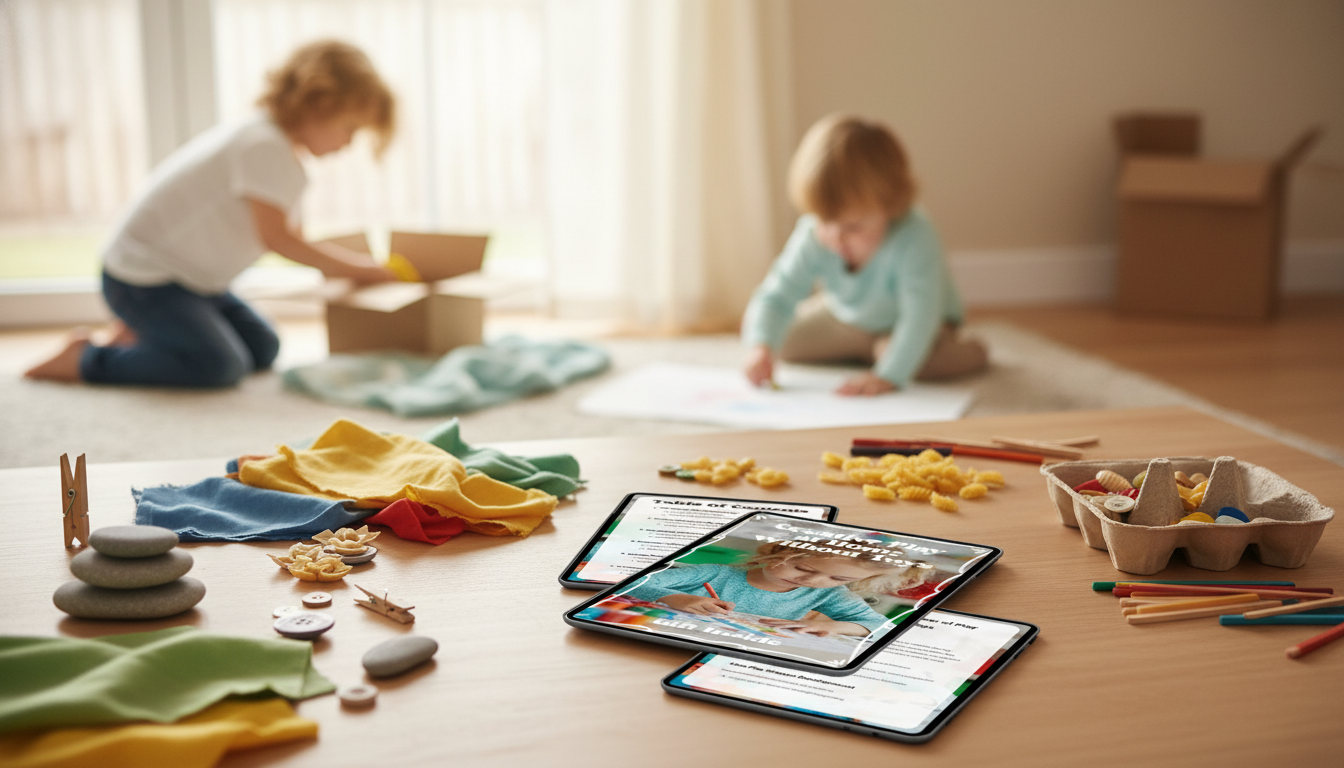
Creative Play at Home Without Toys: Imaginative, Screen-Free Fun That Actually Works
Screen-free play can feel tough when kids announce they’re bored—especially if you’re not surrounded by toys. The good news: imaginative play doesn’t require a shopping cart full of stuff. With a simple setup and a few repeatable prompts, everyday rooms and ordinary household items can become the “materials” for stories, games, building challenges, movement, and art. The goal isn’t a perfect activity—it’s a dependable way to help creativity show up even on low-energy days.
Families also find that playful routines make it easier to limit screen time without constant negotiation. The American Academy of Pediatrics offers practical guidance on healthy media habits that can support these routines: American Academy of Pediatrics: Media and Children.
Why play without toys works surprisingly well
- Fewer objects can reduce decision fatigue. When the room isn’t packed with options, kids are more likely to invent roles, rules, and storylines instead of bouncing between items.
- Open-ended play builds real skills. Pretend and problem-solving play supports language, self-regulation, collaboration, and flexible thinking—especially when siblings or caregivers join briefly to get things rolling. The APA highlights how play supports healthy development and strong bonds: APA: The Importance of Play.
- It adapts to age naturally. Toddlers copy actions, preschoolers lean into pretend, and older kids build longer narratives and rule-based challenges—all using the same basic household “props.”
- Routines stick when you have a repeatable menu. A short list of go-to ideas beats reinventing the wheel every afternoon.
Set up the home so imagination has somewhere to land
- Create a “yes space.” Clear a small area where mess is manageable: a towel on the floor, a tray, or a washable mat. This reduces the need to say “not there” and helps play last longer.
- Rotate simple, non-toy materials. Try blankets, cardboard, painter’s tape, paper, safe kitchen items, scarves, and clothespins. Fewer items, rotated often, stay more interesting than a huge pile that never changes.
- Use an invitation instead of instructions. Set out 3–5 items and add one prompt: “What could this become?” or “What’s the mission?” The setup nudges imagination without controlling it.
- Make starting and stopping easy. Keep materials in one basket and use a quick reset routine (two minutes, music on). Cleanup that feels endless is the fastest way to kill motivation tomorrow.
Quick-start play ideas using only everyday items
When you need play to begin now (not after a long explanation), choose one simple “world” and one simple “job.” Then add a tiny constraint—something like “must have two rooms” or “only paper and tape.” That little bit of structure often turns boredom into momentum.
High-impact ideas with household basics
10 screen-free activities with zero toys
| Activity | What you need | Best ages | How to start (one sentence) |
|---|---|---|---|
| Shadow theater | Flashlight + wall + hands | 3–10 | Turn off lights and invent characters that “talk” in shadows. |
| Indoor scavenger hunt | Paper list (or verbal clues) | 3–12 | Name a color/shape and race to find three matches. |
| Sock puppet show | Socks + marker/paper bits | 3–10 | Make one puppet and give it a problem to solve. |
| Balloon volleyball | Balloon + string (optional) | 3–12 | Keep the balloon off the floor using only elbows. |
| Floor is lava | Pillows/blankets | 4–12 | Cross the room stepping only on “safe islands.” |
| Mystery bag guessing | Bag + safe household items | 3–8 | Feel one item without looking and describe it. |
| Paper obstacle course | Painter’s tape or paper squares | 4–10 | Hop, spin, crawl, and balance through a marked path. |
| Build-a-town | Boxes + paper + tape | 5–12 | Design a town map and assign each building a purpose. |
| Radio drama | Voice + optional pots for sound effects | 6–12 | Tell a story using sound effects for every action. |
| Treasure maps | Paper + pencil | 4–12 | Draw a map of the house and hide a ‘treasure’ at X. |
How to help kids who say “I’m bored”
Make it age-friendly (and sibling-friendly)
For more age-based guidance on supporting kids’ development through everyday interactions, the CDC’s parenting resources are a helpful reference: CDC: Child Development (Positive Parenting Tips).
When you want a ready-made plan: the eBook guide
Creative Play at Home Without Toys – Inspiring eBook Guide for Imaginative, Screen-Free Fun is built around quick ideas, repeatable play frameworks, and simple challenges that use what’s already at home. It’s especially useful for rainy days, travel days, post-school downtime, quiet-time resets, and reducing screen reliance without turning every request into a debate.
If your household also enjoys making stories, posters, or “movie” scenes for play worlds, MidJourney Prompts for Realistic Images – Pro Guide to midjourney prompts for realistic images, Photorealistic AI Art, Digital Download for Creators can be a creative add-on for grown-ups who want extra visual inspiration for backdrops, characters, or printable scene ideas.
FAQ
What if my child refuses to play without toys?
Start with a 2-minute “starter scene” (a fort entrance, a taped road, or a paper menu), then offer two choices and assign a role. Join briefly to model the first step, then step back so your child can take ownership.
How much screen-free time is realistic on busy days?
Aim for short, repeatable blocks like 10–30 minutes. A predictable routine—same time of day and a simple setup basket—often works better than trying to force a long stretch.
Are household-item games safe for toddlers?
They can be, with supervision and age-appropriate materials. Avoid choking hazards, cords, unattended balloons, and small loose parts; choose larger, soft, washable items and keep play contained in a clear “yes space.”










Leave a comment