Imposter Syndrome Checklist: 10-Min Audit + 2-Week Plan

Overcoming Imposter Syndrome with Confidence: A Practical Checklist for Work, School, and Creative Life
Imposter syndrome can show up as persistent self-doubt, fear of being “found out,” and difficulty internalizing achievements—especially during promotions, launches, exams, or new responsibilities. A useful way through is practical, not philosophical: identify triggers, test thoughts against evidence, take small confidence-building actions, and build habits that make progress visible over time. Below is an actionable checklist tailored to professionals, creatives, and students, plus quick scripts, routines, and a simple tracking system you can repeat whenever the doubt spikes.
What imposter syndrome looks like (and why it sticks)
Imposter feelings often feel like a warning signal, but they’re not a reliable measure of competence. It’s possible to perform well and still feel like you don’t belong.
Common signs
- Discounting praise (“They’re just being nice.”)
- Attributing success to luck or timing
- Overpreparing, rewriting, or overchecking
- Procrastinating because starting feels like exposure
- Avoiding stretch opportunities despite being qualified
- Comparing your “behind the scenes” to others’ highlight reels
Why it persists
- Perfectionism paired with low self-compassion
- High standards without a learning-based definition of “good”
- Identity transitions (new role, new major, new medium)
- Environments that reward certainty more than growth
Imposter pattern → likely trigger → helpful response
| Pattern | Typical trigger | Helpful response |
|---|---|---|
| “I just got lucky.” | Praise, good grades, successful launch | List 3 controllable actions that contributed; save evidence (notes, drafts, study plan, iterations). |
| “If I’m not the best, I’m a fraud.” | Comparisons, rankings, peer feedback | Switch to progress metrics: skill gaps, next practice rep, one improvement per week. |
| Overpreparing or rewriting endlessly | High-stakes deliverable, public visibility | Define “done” criteria; timebox; ship a v1; schedule a v2 review. |
| Procrastination and avoidance | Unclear expectations, fear of judgment | Start with a 10-minute “ugly first draft”; ask 1 clarifying question; create a smallest next step. |
A 10-minute self-audit: name the loop before it runs
This quick audit is designed to interrupt the spiral early. The goal isn’t to feel perfect; it’s to reduce intensity enough to take the next step.
- Identify the moment: What event triggered the feeling (deadline, critique, new class, new client, meeting invite)?
- Label the story: Write the exact sentence your mind is repeating (example: “They’ll realize I don’t belong.”).
- Rate intensity (0–10): Pick a modest target (reduce by 2 points, not to zero).
- Spot the hidden rule: What standard is being applied (perfect, effortless, never uncertain)?
- Choose one measurable next action: A message, outline, practice session, office hours visit, draft, or small deliverable.
Actionable confidence checklist (use daily for 2 weeks)
Confidence grows when progress is visible. These habits create proof you can revisit when your mind edits out your competence.
Two-week tracker (simple and repeatable)
| Daily habit | Mon–Fri | Weekend | Notes |
|---|---|---|---|
| Evidence log (win/lesson/next step) | □ □ □ □ □ | □ □ | Keep it short; consistency beats detail. |
| One uncomfortable action (small) | □ □ □ □ □ | □ □ | Send the email, show the draft, ask the question. |
| Skill rep (15–30 min) | □ □ □ □ □ | □ □ | Practice the exact skill that scares you. |
| Recovery (sleep/move/break) | □ □ □ □ □ | □ □ | Treat recovery as performance support. |
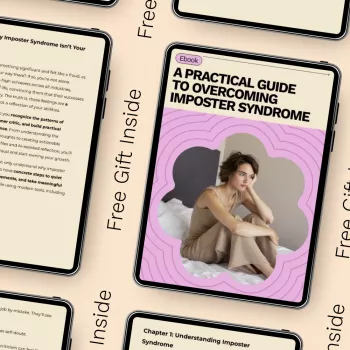
If you want everything above in a single printable flow, use the Practical checklist guide for overcoming imposter syndrome to keep the self-audit, scripts, and tracker in one place.
If you’re a professional: scripts for meetings, reviews, and new roles
If you’re a creative: protect the process from comparison and perfectionism
For creators who build confidence through practice reps and quick iterations, MidJourney prompts for realistic images (for creators building confidence through practice reps) can support a “show up daily” routine with clear constraints and repeatable exercises.
If you’re a student: study habits that reduce self-doubt
When to get extra support
For general, reputable guidance on stress and anxiety tools, see the American Psychological Association (APA) resources on stress and coping, the NHS self-help for anxiety, and the National Institute of Mental Health (NIMH) overview of anxiety disorders. If there are thoughts of self-harm or immediate danger, contact local emergency services or a crisis hotline.
A ready-to-use checklist resource
For a step-by-step format that consolidates the self-audit, two-week tracker, scripts, and reflection prompts into one place, use the Practical checklist guide for overcoming imposter syndrome. Best use: pick one track (professional, creative, or student) for 14 days; complete the evidence log daily; repeat with one new stretch task per cycle.
If structure helps you stay consistent, pairing your confidence habits with a simple maintenance-style routine can make follow-through easier; Train smarter and make your gear last (habit-building through simple checklists) is another example of using short checklists to reduce friction and keep momentum.
FAQ
Can imposter syndrome go away completely?
It often returns during transitions (new roles, tougher classes, bigger audiences). The aim is quicker recovery and fewer avoidance behaviors by using evidence logs, realistic standards, and repeated exposure to stretch tasks.
What’s the fastest way to calm imposter feelings before a presentation or exam?
Use a short routine: three slow breaths, a posture reset, a two-line evidence reminder, one clear objective, and a first-sentence starter. Redirect attention to the next action rather than debating the feeling.
How can someone accept praise without feeling like a fraud?
Say “Thank you,” then name one effort-based contributor (planning, iteration, practice, or research). Save compliments in an evidence folder so your brain has receipts when doubt tries to rewrite history.










Leave a comment