Glossy Blue Ceramic Basin for Bathroom or Balcony Wash
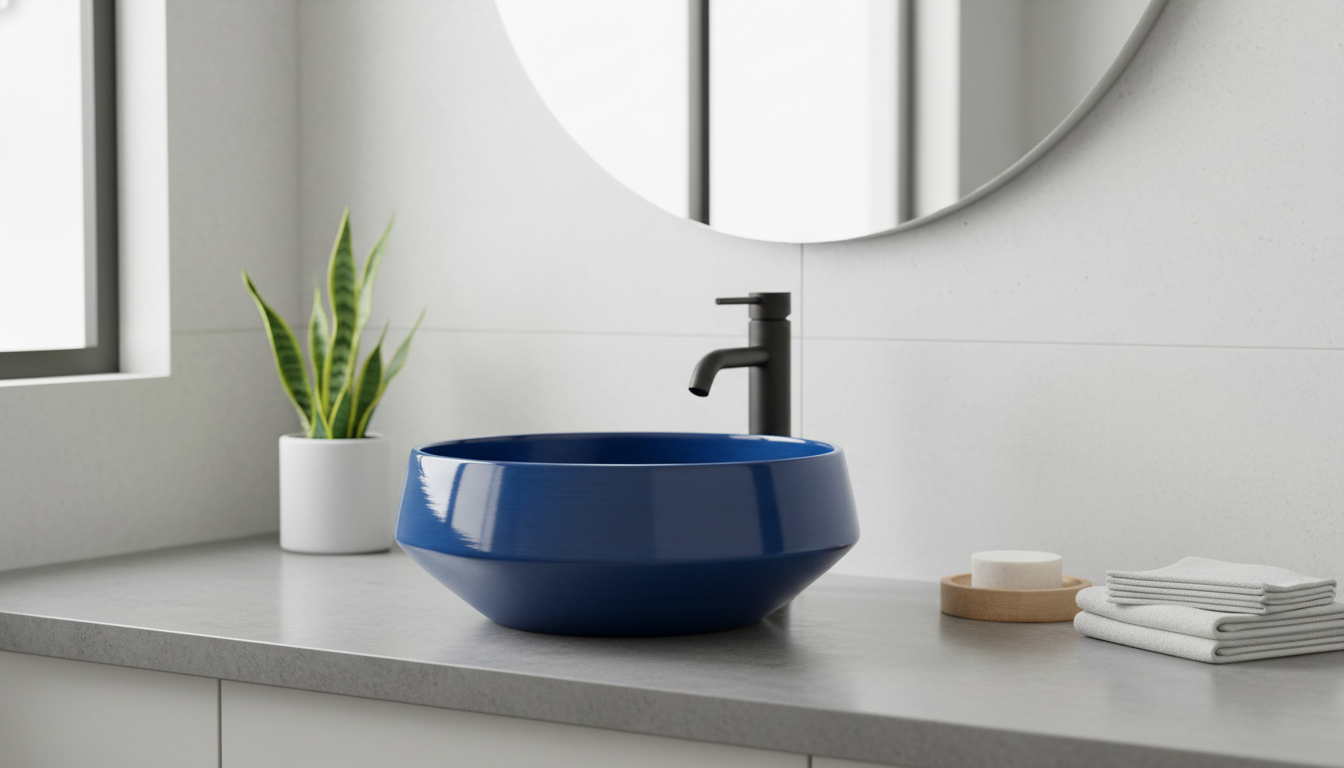
Elegant Blue Ceramic Basin for Bathroom and Balcony
A ceramic basin can elevate a compact powder room or turn a balcony nook into a functional wash area. With a glossy blue finish and a clean silhouette, this style balances decorative impact with everyday practicality—easy to wipe down, resilient in humid spaces, and visually striking against stone, wood, or minimalist tile.
What Makes a Blue Ceramic Basin Feel “Elegant”
Elegance in a basin isn’t only about color—it’s about how the shape and finish behave in real light and real spaces.
- Glaze depth and color variation: rich blue tones add dimension under natural light or warm vanity lighting, making the basin look more like a crafted object than a basic fixture.
- Refined rim profile: a slim or softly rolled edge reads lighter and more tailored than chunky rims, especially in small rooms.
- Balanced proportions: a basin that isn’t too deep or too wide keeps the setup looking intentional in tight bathrooms and balcony wash corners.
- Surface sheen: glossy ceramic highlights cleanliness and pairs well with matte black, brushed nickel, or brass faucets.
- Visual contrast: blue ceramic stands out against white walls, gray microcement, terrazzo, and natural wood without needing extra décor.
Where It Works Best: Bathroom Vanity, Powder Room, or Balcony Wash Corner
A glossy blue basin can play different roles depending on placement—either a quiet upgrade or the main visual anchor.
- Primary bathrooms: use as a focal point on a floating vanity to keep the room feeling open and curated.
- Powder rooms: a bold basin is often enough to define the entire space, letting you keep wall art and accessories minimal.
- Balcony or patio wash areas: a ceramic basin can create a convenient rinse station for gardening, small cleanups, or outdoor entertaining.
- Covered vs. exposed placement: for outdoor use, a covered or semi-covered spot helps preserve the finish and reduces temperature shock risks.
- Drain and water routing: plan a straightforward path for supply lines and a proper trap to prevent odors, especially when plumbing is routed through cabinetry or an exterior wall.
Ceramic Benefits in Humid and High-Use Spaces
Ceramic remains a favorite for sinks and basins because it’s built for daily routines—water, soap, and frequent wiping—without demanding delicate handling.
- Non-porous glazed surface: helps resist staining from soaps, toothpaste, and everyday splashes.
- Easy care: typically needs only mild soap and a soft cloth to stay glossy.
- Heat and moisture tolerance: well-suited for steamy bathrooms and ventilated balcony setups where humidity fluctuates.
- Color stability: glazed ceramic generally holds color well under indoor lighting; for balconies, shade helps manage UV exposure over time.
- Timeless look: ceramic bridges classic and contemporary styles, so faucet updates later won’t make the basin feel out of place.
For water-saving upgrades, pairing the basin with a high-efficiency faucet can reduce daily water use; see EPA WaterSense — Saving Water Indoors for practical guidance.
Quick Fit Check Before Buying
Most installation headaches come from small mismatches—spout reach, drain hardware, or a vessel height that feels awkward. A quick check up front keeps the final result comfortable and clean-looking.
- Measure the countertop or mounting surface and keep comfortable clearance on both sides so hands don’t bump a wall or mirror frame.
- Confirm faucet compatibility: deck-mounted vs. wall-mounted, and ensure reach aligns with bowl position.
- Verify drain opening size and whether an overflow is required for the chosen faucet/stopper setup.
- Consider splash control: deeper bowls and centered faucets reduce mess on small vanities.
- Match the basin height to users: too tall on a vessel setup can feel awkward for daily use, especially for kids.
Pre-Installation Checklist
| Item to Confirm | Why It Matters | What to Look For |
|---|---|---|
| Mounting style | Determines cutout and visual profile | Vessel, above-counter, or integrated approach based on vanity design |
| Faucet type and reach | Prevents off-center flow and splashing | Spout aligns near the bowl’s center and clears the rim comfortably |
| Drain compatibility | Ensures leak-free installation | Correct drain diameter; compatible pop-up/stopper |
| Countertop space | Improves usability | Room for soap, toothbrush cup, or towel hook nearby |
| Outdoor placement (if applicable) | Protects finish and plumbing | Shaded location; freeze protection plan if in cold climates |
If accessibility is part of the plan (especially in guest baths or aging-in-place remodels), reviewing the ADA Standards for Accessible Design can help guide comfortable heights and clearances.
Style Pairings That Highlight a Blue Basin
Because blue is inherently eye-catching, the best pairings support the basin rather than competing with it.
Care and Long-Term Maintenance
Featured Basin
- Elegant Blue Ceramic Basin for Bathroom and Balcony — a statement-ready option with a vivid blue ceramic finish designed to elevate both bathrooms and balcony wash corners.
More In-Stock Finds
- MidJourney Prompts for Realistic Images – Pro Guide to midjourney prompts for realistic images, Photorealistic AI Art, Digital Download for Creators
- Train Smarter and Make Your Gear Last – Sports Gear Care Guide, Digital Download eBook & Checklist for Athletes
FAQ
Can a ceramic basin be used on a balcony?
Yes, as long as plumbing is properly installed and the basin is placed in a protected area. For best durability, avoid direct sun exposure when possible, plan for adequate drainage, and protect plumbing if freezing temperatures are a risk.
How should a glossy ceramic basin be cleaned without damaging the finish?
Use mild soap or a non-abrasive bathroom cleaner with a soft cloth or sponge. Avoid abrasive pads and strong acids, then rinse and dry to reduce mineral spotting.
What faucet works best with a vessel-style ceramic basin?
A vessel-height faucet or a wall-mounted faucet with enough spout reach typically works best, directing water near the center of the bowl. Confirm rim clearance and make sure the drain/stopper setup matches the basin and faucet configuration.










Leave a comment