30-Day Discipline Reset: Stay Consistent Without Burnout
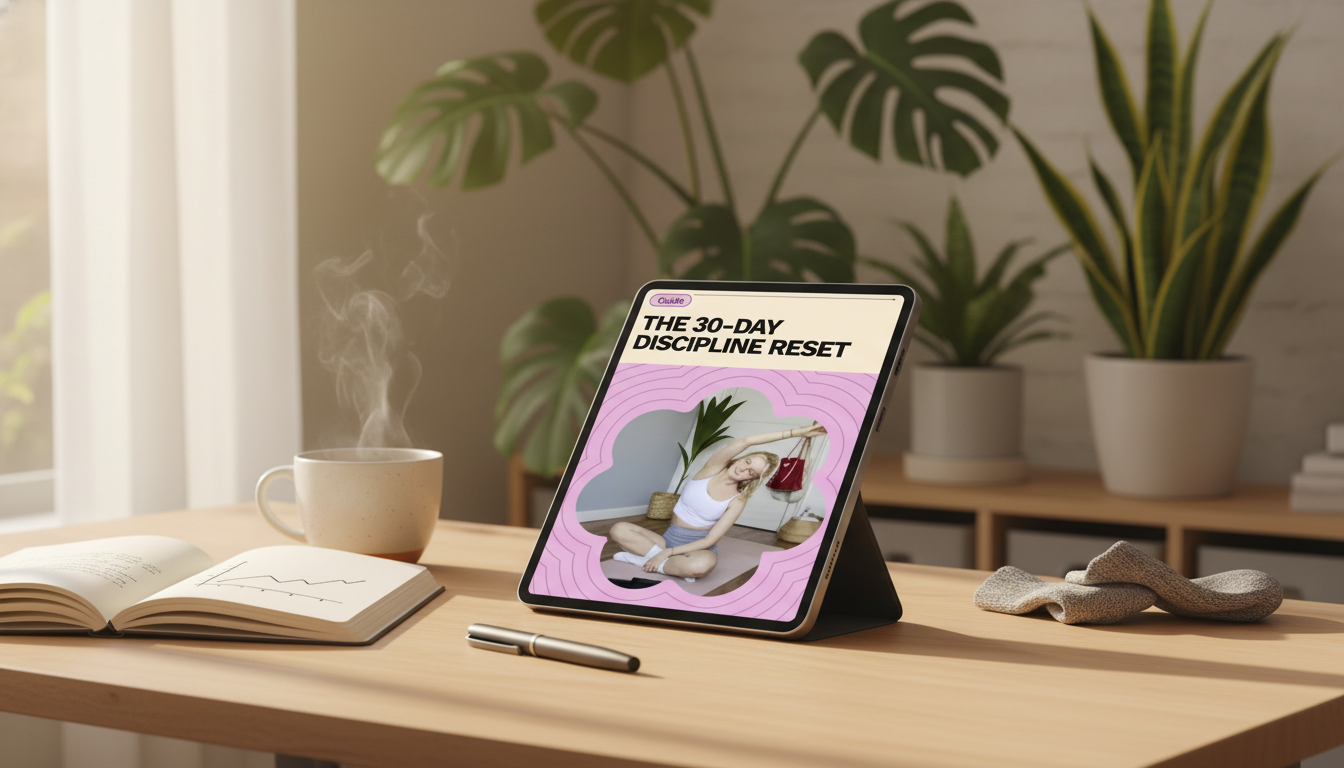
The 30-Day Discipline Reset: Build Consistency Without Burnout
Discipline gets simpler when it’s treated like a system instead of a personality trait. A 30-day reset works best when it relies on small, repeatable actions, clear triggers, and recovery rules that protect your energy—so progress continues even on low-motivation days. The goal isn’t to “try harder.” It’s to make follow-through easier to repeat, easier to restart, and harder to accidentally abandon.
What “discipline” actually is (and what it isn’t)
Discipline is the ability to follow a plan even when motivation changes. It’s not a permanent mood, and it’s not proof of “good” character. It’s the result of cues, environment design, and repetition—especially when the action is small enough to do on imperfect days.
Willpower is limited, which is why a reset should reduce friction and decision load. Instead of debating what to do each day, you create a default path: a consistent trigger, a minimum action, and a boundary that prevents you from overdoing it.
Consistency beats intensity. Ten minutes daily often outperforms a massive effort that only happens when everything feels perfect. Burnout usually comes from overcommitment, vague goals, and no recovery rules—structure fixes those problems faster than self-talk.
Set the reset rules: one focus, one minimum, one boundary
A clean reset starts with three choices: one focus area, one minimum viable action, and one boundary. Keeping the scope narrow prevents scattered effort and makes it easier to notice what’s working.
- One focus: pick a single habit domain for 30 days (health, work, learning, home, or finances).
- One minimum viable action (MVA): the smallest version that still counts (5 minutes, 1 page, 1 email, 1 workout set).
- One boundary: a clear limit that prevents “too much, too soon” (time cap, stop time, or no doubling up).
- One cue (trigger): attach the habit to a stable moment (after coffee, at your desk, after brushing teeth).
Reset Rules Worksheet (fill-in examples)
| Element | Example options | Your choice |
|---|---|---|
| Primary focus | Fitness, deep work, study, decluttering | |
| Minimum viable action | 5 minutes, 1 rep, 1 paragraph, 1 task | |
| Boundary to prevent burnout | 30-min cap, stop at 9pm, 1 rest day/week | |
| Cue (trigger) | After coffee, after commute, at desk, after brushing teeth | |
| Reward (small) | Checkmark, tea, short walk, music |
Design a 30-day progression that builds momentum
The best progressions protect consistency first, then expand output gradually. Keep the cue the same all month; change the workload, not the trigger.
- Days 1–3: show up and do only the MVA. Your win is “I did it,” not “I did a lot.”
- Days 4–10: add a small expansion (about 10–20% more time or difficulty) while keeping the MVA intact.
- Days 11–20: add structure—checklists, templates, or scheduled blocks—to remove daily decision-making.
- Days 21–30: stabilize with variation (light/heavy days) and a relapse plan for busy or low-energy days.
Implementation intentions (“if–then” plans) are especially effective for making your next step automatic, which can improve follow-through when motivation dips. A classic meta-analysis summarizes why these plans work across many goal types: Implementation Intentions and Goal Achievement.
Make consistency easier: reduce friction and automate starts
Most “discipline problems” are start problems. If the first 60 seconds are easy, you begin more often—and beginning is the hardest part.
For habit design fundamentals—identity-based habits, cues, and reducing friction—James Clear’s habit framework is a helpful reference: Atomic Habits concepts.
Stay consistent without burnout: energy rules and recovery
Sleep is a major driver of self-regulation and consistency. If you’re trying to reset discipline, protect sleep like a non-negotiable baseline: CDC sleep guidance.
Track the right things: simple metrics that drive follow-through
Daily Check-In Template (keep it under 60 seconds)
| Prompt | Example | Your note |
|---|---|---|
| Did the cue happen? | After coffee at 8:00 | |
| Did I complete the minimum? | 5 minutes of planning | |
| What got in the way (if anything)? | Phone distractions | |
| One adjustment for tomorrow | Phone in drawer; timer on |
When discipline breaks: quick reset protocols
A structured 30-day plan to follow
A ready-made structure can reduce decision fatigue—especially if it includes minimum actions, built-in progressions, and clear recovery rules. For a guided framework with worksheets and tracking built in, see The 30-Day Discipline Reset – A Practical Guide on How to Build Discipline in 30 Days, Create Lasting Habits, and Stay Consistent Without Burnout.
If your reset focus is fitness, consistency also depends on staying ready to train. A simple gear-care checklist can reduce friction (no missing items, fewer breakdowns) and keep workouts from being derailed: Train Smarter and Make Your Gear Last – Sports Gear Care Guide, Digital Download eBook & Checklist for Athletes.
What to look for in a 30-day discipline guide
| Feature | Why it matters | What it prevents |
|---|---|---|
| Minimum viable actions | Keeps the habit alive on low days | All-or-nothing quitting |
| Progression steps | Gradually increases capacity | Overdoing it early |
| Tracking templates | Makes patterns visible quickly | Guessing and guilt |
| Recovery rules | Protects energy and mood | Burnout cycles |
FAQ
How long does it take to build discipline?
Discipline strengthens through repeated follow-through, not a single breakthrough. A 30-day window is often enough to establish a stable routine when the action is small, the cue is consistent, and boundaries protect your energy.
What if motivation disappears after a few days?
Use a fixed cue and a minimum viable action that’s easy to complete even when you’re tired. Keep a low-day version ready and follow a “never miss twice” rule so one off day doesn’t turn into a lost week.
How can discipline improve without burning out?
Use time caps, planned recovery, and light/heavy days so effort stays sustainable. Clear stopping rules make it easier to show up tomorrow, which is where consistency is built.











Leave a comment