Newborn Sleeps All Day, Awake at Night: Why & Fixes
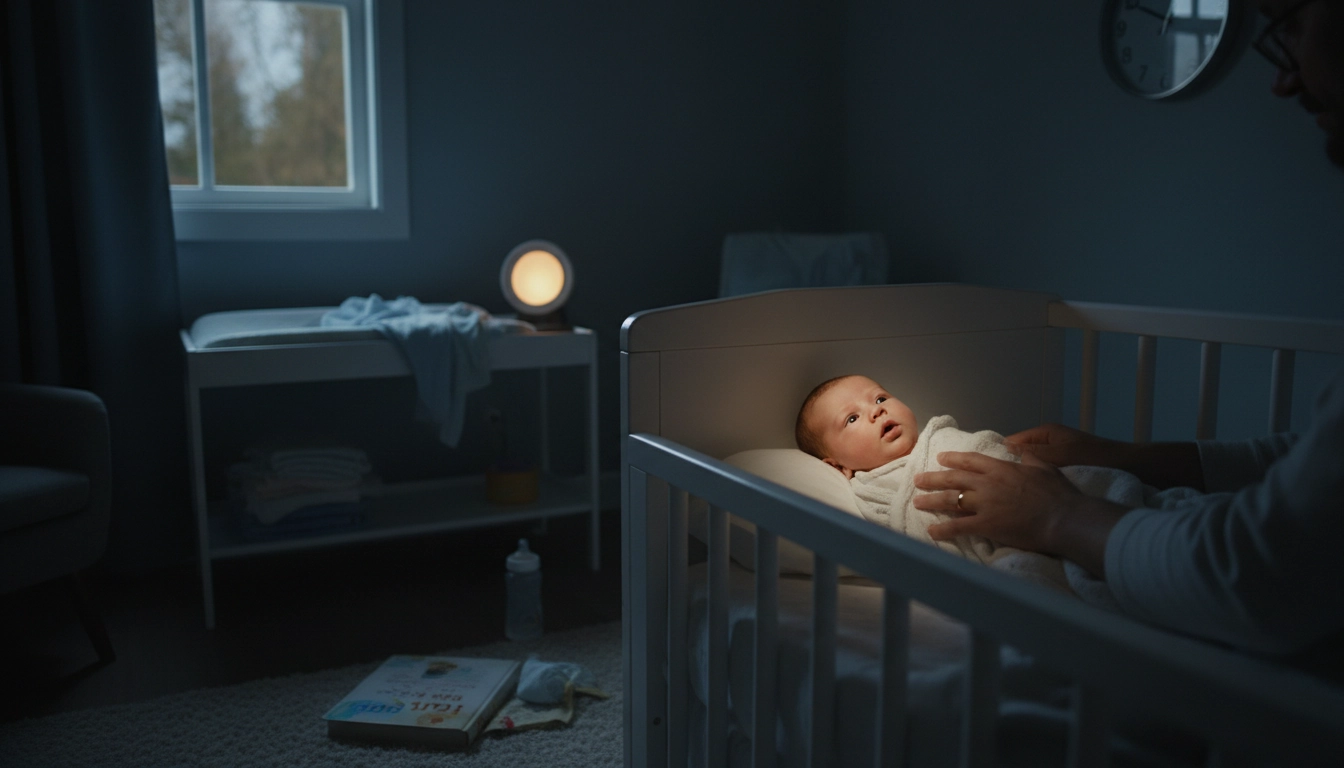
Why does my newborn sleep all day but not at night?
Answer
It’s common for newborns to seem “backward” on sleep: plenty of daytime dozing and wide-awake nights. In the first weeks, babies don’t have a mature circadian rhythm (the internal clock that helps adults feel sleepy at night). Instead, they sleep in short bursts around the clock and wake often because their stomachs are tiny and they need frequent feeds.
Another reason nights can feel harder is that newborn sleep is lighter and more active. Babies spend more time in lighter stages of sleep, which makes them easier to wake from normal noises, gas, or the startle reflex. If your baby is also getting long, cozy daytime naps in dim rooms, their body may not be getting enough “daytime cues” to start sorting day from night.
To gently nudge nights in the right direction, focus on teaching the difference between day and night rather than expecting a strict schedule. Keep daytime brighter and more interactive: open curtains, talk during feeds, and allow normal household sounds. At night, keep lights low, voices quiet, and interactions calm and brief—feed, change if needed, then back to sleep. Many families also find it helps to cap very long daytime naps (for example, waking to feed if a nap stretches past 2–3 hours) so more calories and wake time happen earlier in the day.
Make sure sleep is always set up safely: place baby on their back on a firm, flat surface with no loose bedding. If nighttime wakeups feel extreme, your baby is difficult to rouse, or you’re concerned about weight gain or jaundice, check in with your pediatrician.
For a step-by-step approach to balancing naps and nighttime sleep, see this guide on baby naps vs. night sleep and a 7-day reset.
FAQ
When do newborns start sleeping longer at night?
Many babies begin stretching one nighttime sleep period around 6–12 weeks, but it varies widely. Longer stretches depend on feeding needs, growth, and development, and frequent wakeups are still normal early on.
















Leave a comment