Eliminate Pet Odors Fast: A Simple, Fresh-Home Plan
What are the best ways to eliminate pet odor from my home?
Eliminating pet odor works best when odors are removed at the source, not masked. Start with a quick “reset,” then build a simple routine that keeps dander, oils, and bacteria from settling into fabrics and carpets.
1) Find and treat the source (not just the air)
Walk the home and identify the biggest odor zones: litter area, rugs, upholstered furniture, pet hangouts, and any accident spots. For urine or organic messes, use an enzymatic cleaner and follow label directions (including dwell time) so enzymes can break down odor-causing residue. Avoid ammonia-based cleaners, which can mimic urine and encourage repeat marking.
2) Deep-clean soft surfaces on a schedule
Soft materials hold odor. Vacuum carpets and upholstery slowly (two passes) and empty the canister/bag frequently. Wash throw blankets and slipcovers in hot water when safe for the fabric. For rugs and upholstery, periodic steam cleaning or professional cleaning helps remove embedded oils and dander that regular vacuuming can miss.
3) Control hair and dander before it spreads
Brush pets regularly and wipe paws after outdoor time to reduce what gets tracked inside. Wash pet accessories you can launder (covers, towels) and keep a washable layer on favorite lounging spots so odors don’t soak into furniture.
4) Improve airflow and filtration
Ventilate daily by cracking windows when possible. Use a HEPA air purifier in high-traffic pet areas and replace HVAC filters on schedule. Better filtration reduces airborne dander that can carry odor and settle back onto surfaces.
5) Keep “odor hotspots” extra clean
For litter boxes, scoop daily and fully empty and wash the box regularly. For dogs, keep coats clean and dry—damp fur and skin oils can create lingering smells. If odors persist despite cleaning, consider checking for hidden stains under rugs or along baseboards.
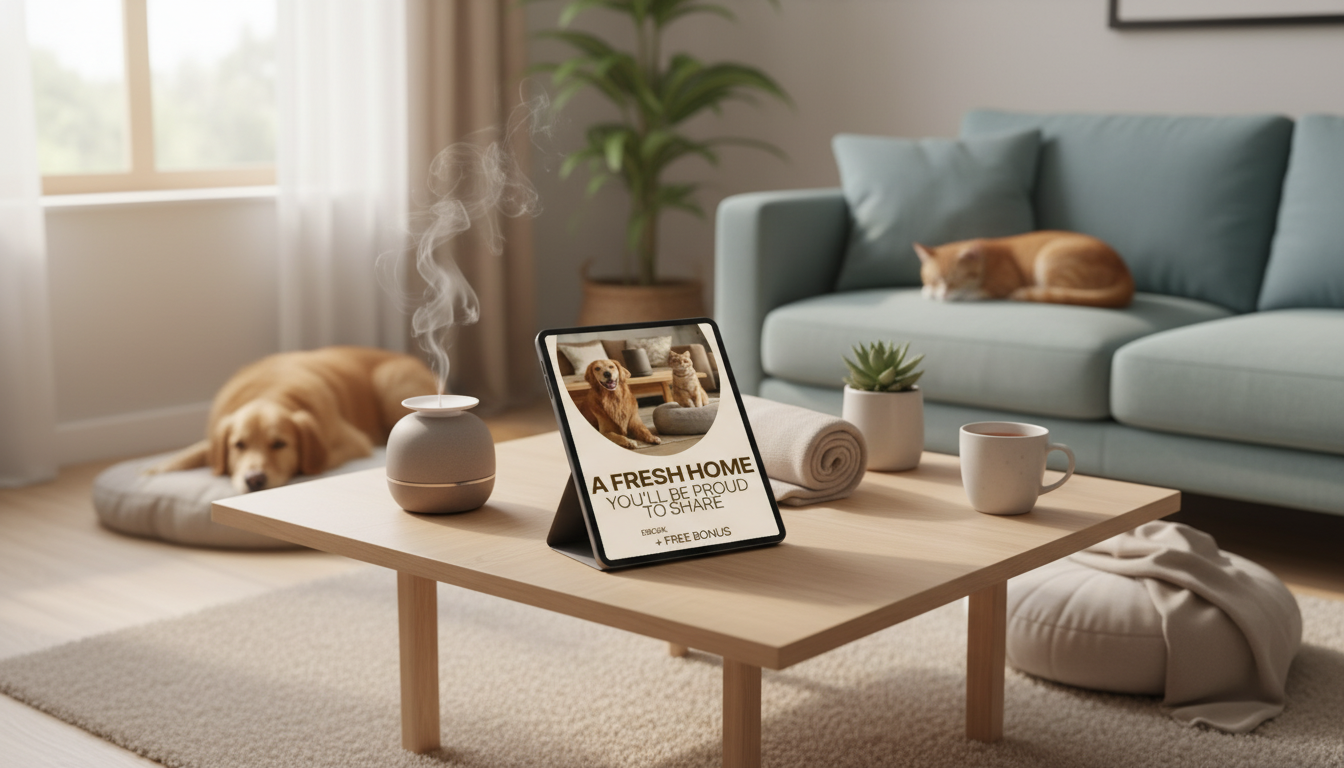
For a step-by-step, guest-ready routine, see the full guide here: How to Reduce Pet Odors for a Fresh, Guest-Ready Home.
FAQ
How can I make my house smell fresh without using strong fragrances?
Focus on removal: vacuum and wash fabrics, use an enzyme cleaner on organic odors, and run a HEPA purifier. Fresh air and clean surfaces keep the home neutral without heavy scents.










Leave a comment