Discipline Your Dog on Walks: Calm Leash Manners
How to discipline a dog while walking?
Disciplining a dog on a walk works best when it’s calm, immediate, and tied to what happens next. Instead of punishment, focus on clear boundaries and consistent consequences: remove access to what the dog wants (forward movement, greetings, sniffing) and reward the behavior you want (loose leash, check-ins, calm passing).
Use the walk itself as the consequence
If your dog pulls, don’t keep moving. Stop, plant your feet, and wait for slack in the leash. The moment the leash loosens—even slightly—mark it with a cheerful “yes” and continue. This teaches that pulling makes the walk pause, while a loose leash makes the walk happen.
Redirect before the mistake becomes a habit
Watch for early signs like head locking onto a distraction, speed increasing, or body stiffening. Before your dog hits the end of the leash, change direction, step off to the side, or ask for an easy cue like “touch” (hand target). Reward the turn and the attention, then keep going.
Keep corrections quiet and predictable
Avoid yelling or jerking the leash; those can increase arousal and create confusion. Use a neutral, brief interrupter like “uh-uh,” then immediately show what to do instead (walk at your side, sit, or look at you). The dog should always have a clear path to success.
Reward the right moments generously
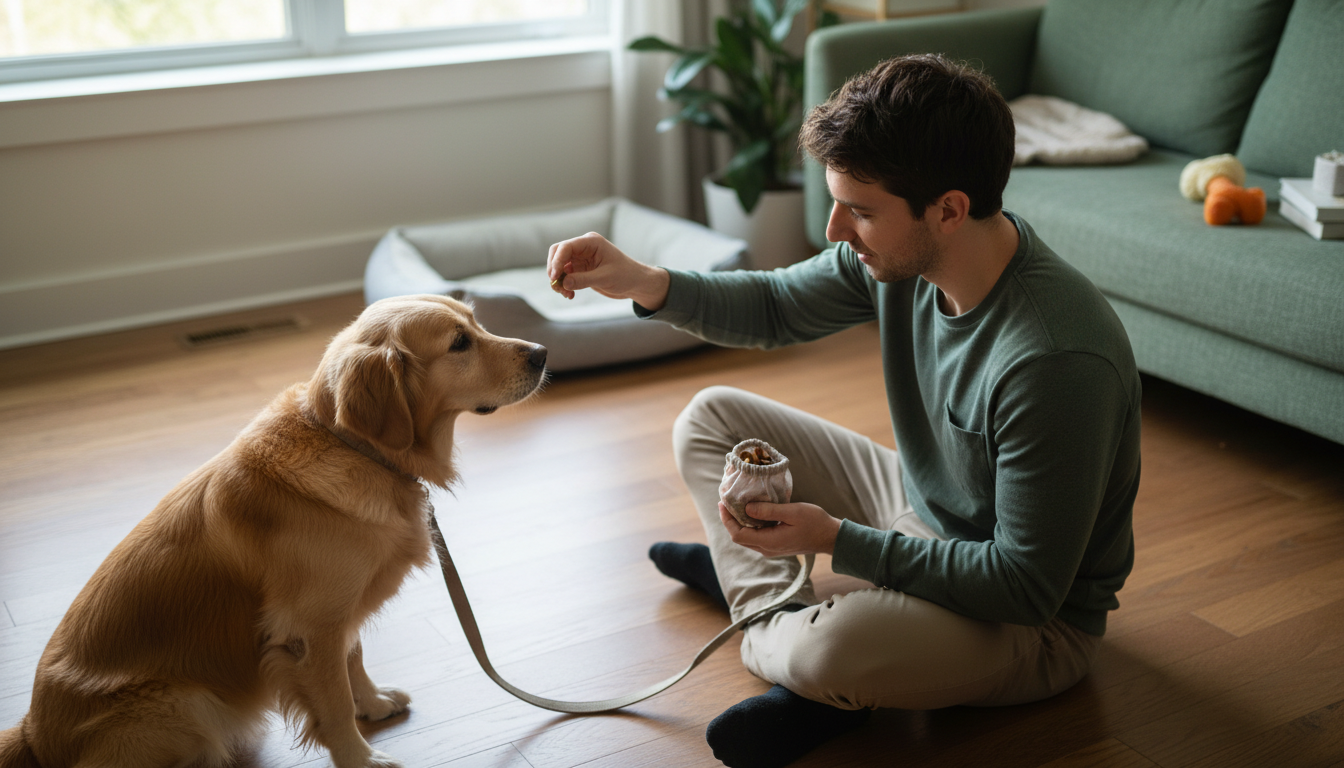
Discipline without reinforcement often turns into constant “no.” Carry small treats and pay your dog for checking in, walking near you, and choosing to ignore distractions. Over time, those rewarded choices become the default.
Set your dog up with the right routine
A bit of pre-walk energy release and the right equipment can make “discipline” easier because your dog can actually think. For a practical, safety-first routine and checklist that supports better behavior, see this dog walking workout checklist.
FAQ
How do I stop my dog from pulling on the leash?
Stop moving the instant the leash goes tight and only continue when there’s slack. Reinforce loose-leash steps with treats and praise so your dog learns that pulling delays the walk.













Leave a comment