Undertone Tests That Work: Find Your Best Shade Match
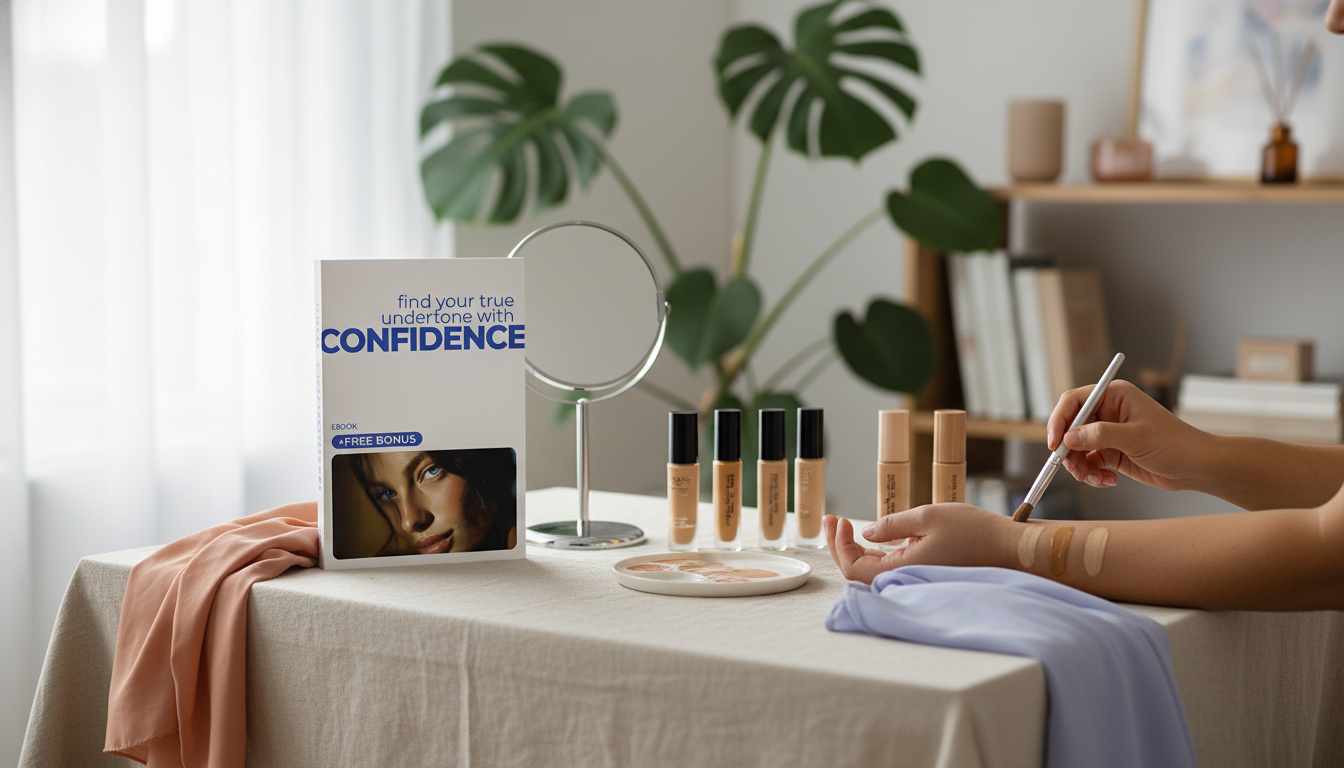
Find Your Undertone With Confidence: A Practical Guide to Flawless Shade Matches
Undertone is the quiet detail that makes foundation look seamless, blush look natural, and lipstick feel “right.” When it’s off, makeup can turn ashy, too pink, or oddly yellow—even if the depth is correct. The good news: undertone isn’t a mystery trait you’re “born knowing.” With a few repeatable checks (done in the right lighting), it becomes much easier to choose shades that stay flattering from morning to night.
Undertone vs. Skin Tone: The Mix-Up That Causes Most Bad Matches
Skin tone (also called depth) is how light or deep your complexion looks. Undertone is the subtle hue under the surface—cool, warm, neutral, or olive—that tends to stay relatively stable throughout the year. Your surface tone can shift with sun exposure, redness, irritation, and hyperpigmentation, but your undertone usually doesn’t swing dramatically. For a “perfect match,” you need both: the right depth and the right undertone family.
Olive undertone is especially easy to miss because it can read warm, neutral, or slightly cool depending on lighting and the pigments in a formula. If foundations often look peachy or orange after they dry, olive is worth a closer look.
Quick clues: undertone families and common makeup outcomes
| Undertone family | Common visual clues | What happens when you wear the wrong undertone |
|---|---|---|
| Cool (pink/red/blue) | Skin may flush pink; silver jewelry often looks crisp | Warm/yellow base can turn sallow or too yellow; bronzer looks orange |
| Warm (yellow/golden/peach) | Golden cast; some tan easily; gold jewelry looks harmonious | Cool/pink base can look ashy or gray; blush can read “too rosy” |
| Neutral (balanced) | Neither strongly pink nor strongly yellow; many shades “almost work” | Extremes can look off quickly (too pink or too yellow) even if depth fits |
| Olive (green/gray cast) | Slight green/gray tint; some foundations look peachy/orange on skin | Pink bases look ruddy; yellow bases go orange; neutral may look peach |
At-Home Undertone Tests That Hold Up in Real Life
Lighting can make the same skin look warm at noon and cool by evening, so start with one rule: test in natural daylight near a window. Avoid bathroom lighting and strong warm/cool bulbs that tint everything.
- Jewelry test: Hold gold and silver near the jaw/neck. Notice which makes your skin look clearer and more even (not “tan,” not “pink,” just more balanced).
- White paper test: Hold a bright white sheet next to your face. If skin reads more pink/blue, you may be cool; more yellow/golden, warm; balanced, neutral; slightly green/gray, olive.
- Vein test (secondary clue): Wrist veins reading blue/purple can suggest cool; green can suggest warm; a mix can suggest neutral. This varies by depth and lighting, so don’t use it alone.
- Sun reaction (not definitive): Tanning easily can point warm/olive; burning easily can point cool. Skin behavior varies widely, so treat this as supporting evidence only.
A practical approach is the “2 out of 3” rule: if at least two tests agree, treat that as your starting family, then confirm with actual swatches.
For more background on pigmentation and why surface color can change, helpful references include the American Academy of Dermatology Association and DermNet NZ. For a deeper explanation of how light affects perceived color, see CIE colorimetry concepts.
How Undertone Changes Foundation and Concealer Choices
For a cohesive look, match foundation to the neck/chest area—not a flushed cheek or the wrist. Do short swipes along the jawline, then step back. Most importantly, let swatches dry: many formulas oxidize and can shift warmer or a shade darker after a few minutes.
Shade labels vary by brand, but these translations often help:
Common shade-label translations (varies by brand)
| Label on bottle | Often means | Who it tends to suit |
|---|---|---|
| C / Cool / Rose | Pink or red-leaning base | Cool undertones; some neutral-cool |
| W / Warm / Golden | Yellow or golden base | Warm undertones; some warm-olive |
| N / Neutral / Beige | Balanced base | Neutral undertones; many olives if not peachy |
| Olive / O | Green/gray-leaning base | Olive undertones across depths |
For concealer, decide what you’re correcting. Under-eye darkness often looks blue-purple, so a concealer that’s slightly warmer or peachier can brighten without turning gray. For blemishes, match your foundation undertone closely—if you go too warm or too cool, you can create a visible “halo” around the spot.
If the depth seems right but something still looks “off,” undertone is usually the culprit—not that you picked a shade that’s too light or too deep.
Blush, Bronzer, and Highlighter: Undertone-Friendly Picks
Lip and Eye Colors That Look Effortless (Not “Floating”)
A Simple Undertone Routine for Confident Buying
A Guided Workbook Option for Faster Clarity
- Find Your True Undertone With Confidence (ebook guide)
- Rest Days That Actually Work – Fitness Recovery Guide (digital download)
FAQ
Can undertone change over time?
Undertone is relatively stable, but surface tone can change with tanning, redness, acne, or pigmentation. If your skin has gone through a major change, reassess your tests—just expect your underlying undertone family to remain similar.
What if I’m neutral or olive and everything still looks wrong?
Compare neutral vs. olive-leaning shades and avoid “neutral” bases that look peachy. Check for oxidation after 10 minutes, and confirm in more than one lighting setup; if needed, use tiny amounts of blue or green mixer to correct a foundation that runs too orange or too pink.
How do I match foundation when my face and neck are different colors?
Match to the neck/chest for overall harmony, then use bronzer or a light face tint to blend the face into the rest of the body. Spot conceal where you need coverage instead of choosing a darker foundation just to match a deeper-toned face.











Leave a comment