Teach Toddlers to Dress Themselves: Easy Daily Routines
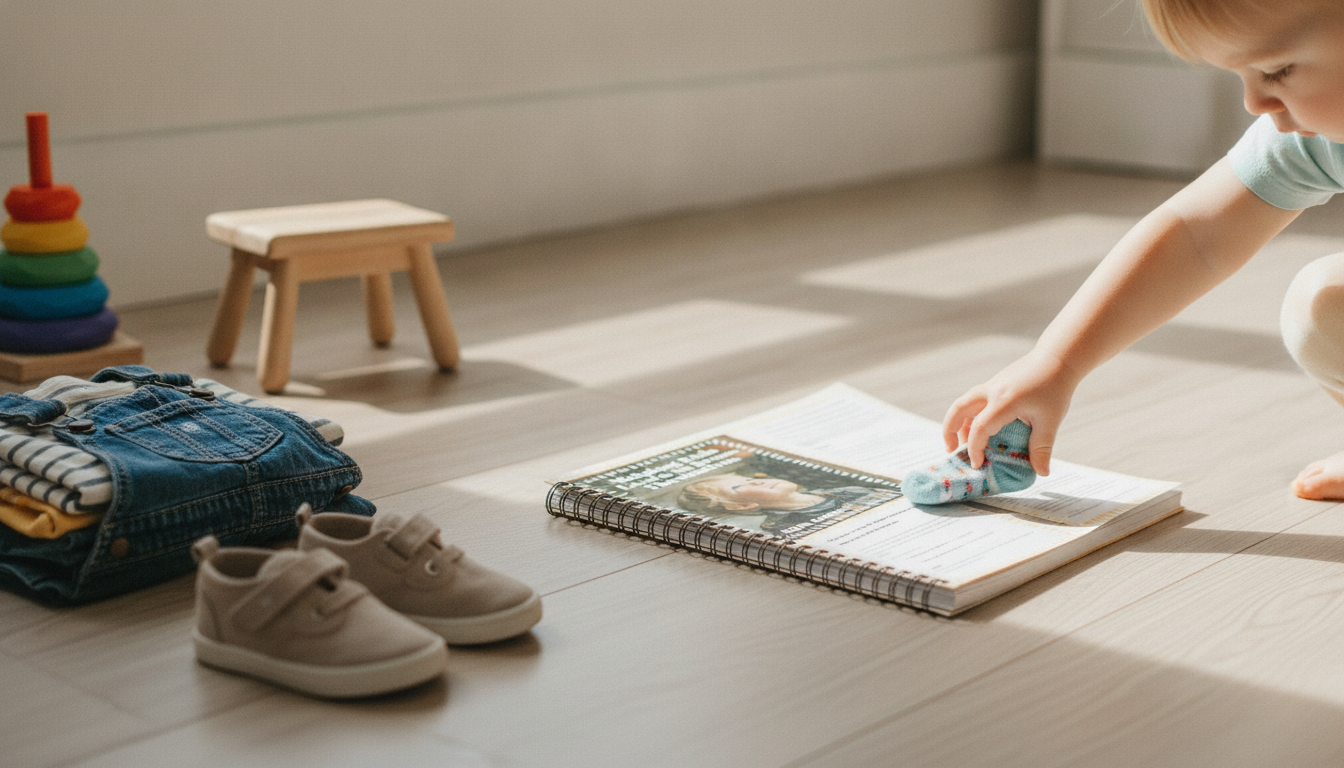
Helping Kids Learn to Dress Themselves: Practical Steps for Toddlers and Preschoolers
Learning to dress is a daily-life skill that builds independence, confidence, and smoother mornings. The goal is progress, not perfection—small routines, the right clothing choices, and patient coaching help toddlers and preschoolers move from “help me” to “I can do it.”
What “self-dressing” looks like at different stages
Self-dressing isn’t a single milestone—it’s a chain of small skills that grow over time. Most toddlers begin by participating (not completing), while preschoolers start to sequence steps and finish more of the job independently.
- Toddlers often start with participation: pushing arms through sleeves, stepping into pants, pulling socks off, and choosing between two outfits.
- Preschoolers typically grow into sequencing and finishing: orienting clothing, pulling up waistbands, managing simple fasteners, and putting shoes on the correct feet.
- Expect uneven progress: a child may master shirts before pants, or nail shoes one day and struggle the next when tired or rushed.
- Independence increases fastest when the same steps happen in the same order every day.
Dressing skills ladder (typical ranges and coaching focus)
| Skill | Typical age range | How to support |
|---|---|---|
| Pulling off socks/hat | 18–30 months | Turn it into a game; praise effort; offer easy-grip sock cuffs |
| Pushing arms through sleeves | 18–36 months | Hold the shirt open; use “tag goes to the back” cues; short sleeves first |
| Stepping into pants | 24–42 months | Place pants on the floor with the front facing up; guide one leg at a time |
| Pulling up waistband | 30–48 months | Choose elastic waists; teach “thumbs in” to pull up evenly |
| Putting on shoes | 30–60 months | Use slip-ons/Velcro; mark insoles with matching stickers for left/right |
| Managing zippers/buttons | 4–6 years (varies) | Start with large zippers and big buttons; practice off the body with a dressing board |
For general developmental context, it can help to compare your child’s progress to broad ranges—not to pressure them, but to set realistic expectations. The CDC developmental milestones provide helpful reference points.
Set up the environment for success
A few changes at home can remove common barriers and turn dressing into a predictable, “I know what to do next” routine.
- Create a child-level dressing station: a low hook for jackets, a small basket for socks/underwear, and a stool or chair for balance.
- Use a mirror to help children notice orientation (front/back, inside/out) without constant adult correction.
- Limit choices to prevent overwhelm: two weather-appropriate outfits is often enough to preserve autonomy and reduce delays.
- Lay clothing out in order (underwear → top → bottom → socks → shoes) to teach sequencing and reduce backtracking.
Choose clothes that teach skills (not frustration)
Clothing can be a built-in teacher or an obstacle course. When you pick items that “cooperate,” your child gets more successful repetitions—without a power struggle.
- Prioritize easy-on features: elastic waists, wider neck openings, raglan sleeves, roomy armholes, and soft/stretch fabrics.
- Delay tricky fasteners until the routine is stable; introduce one new challenge at a time (for example, a zipper on the jacket only).
- Use visual cues: tags, a small dot inside the back, or a simple “front picture” on the shirt for quick orientation.
- Avoid tight cuffs, stiff denim, complex layers, and shoes that require advanced tying until readiness is clear.
Teach with a simple coaching sequence
The most effective coaching is consistent and minimal: show the skill, practice it together, then fade your help so your child owns the last step. This approach aligns well with positive parenting strategies that emphasize calm, specific guidance (see the American Academy of Pediatrics’ positive parenting tips).
- Use a consistent progression: demonstrate once, do it together, then reduce help to a brief prompt.
- Break tasks into micro-steps: “Find the neck hole” → “Head in” → “One arm” → “Other arm” → “Pull down.”
- Give specific feedback: replace “Good job” with “You lined up the waistband and pulled evenly.”
- When stuck, assist the smallest amount needed (start the zipper, open the sleeve) so the child still completes the final action.
If your child gets overwhelmed, pause and reset with a simple script: “I’ll hold the shirt open. You do the arm.” Keeping the “job” small prevents shutdown and keeps practice moving forward.
Build a daily routine that makes practice predictable
Kids learn dressing fastest when practice happens in steady, low-pressure moments—especially when the steps don’t change from day to day.
Self-help skills like dressing often develop alongside other independence skills. For more on practical self-help growth in the toddler years, Zero to Three offers research-informed guidance for families.
Handling common roadblocks without power struggles
Encouragement that builds real confidence
A practical guide for step-by-step routines and skill-building
- Helping Kids Learn to Dress Themselves – Practical Parenting Guide
- Shine From Within: Your Guide to a Strong, Positive Self-Image
FAQ
What age should a child be able to dress themselves?
Many toddlers begin helping with dressing around 18–24 months, preschoolers often manage several steps by ages 3–5, and more complete independence commonly develops across ages 4–6. Variation is normal; consider extra support if dressing delays show up alongside broader difficulties with fine motor skills, following simple sequences, or daily self-care.
How can mornings stay calm while a child practices dressing?
Build in buffer time, stick to an identical step order, and choose easy clothing (elastic waists, simple shoes) on school days. Practice tougher skills on weekends, and on rushed mornings help only with the hardest part—so your child still finishes the final step.
How do you teach zippers and buttons without frustration?
Start with large zippers and big buttons, and practice off the body (like on a dressing board) before doing it on a wiggly kid. Teach “pinch and hold the bottom, then pull up,” and introduce one fastener type at a time until it feels routine.








Leave a comment