Stress Tracker Checklist: Calm Skin During Flare-Ups
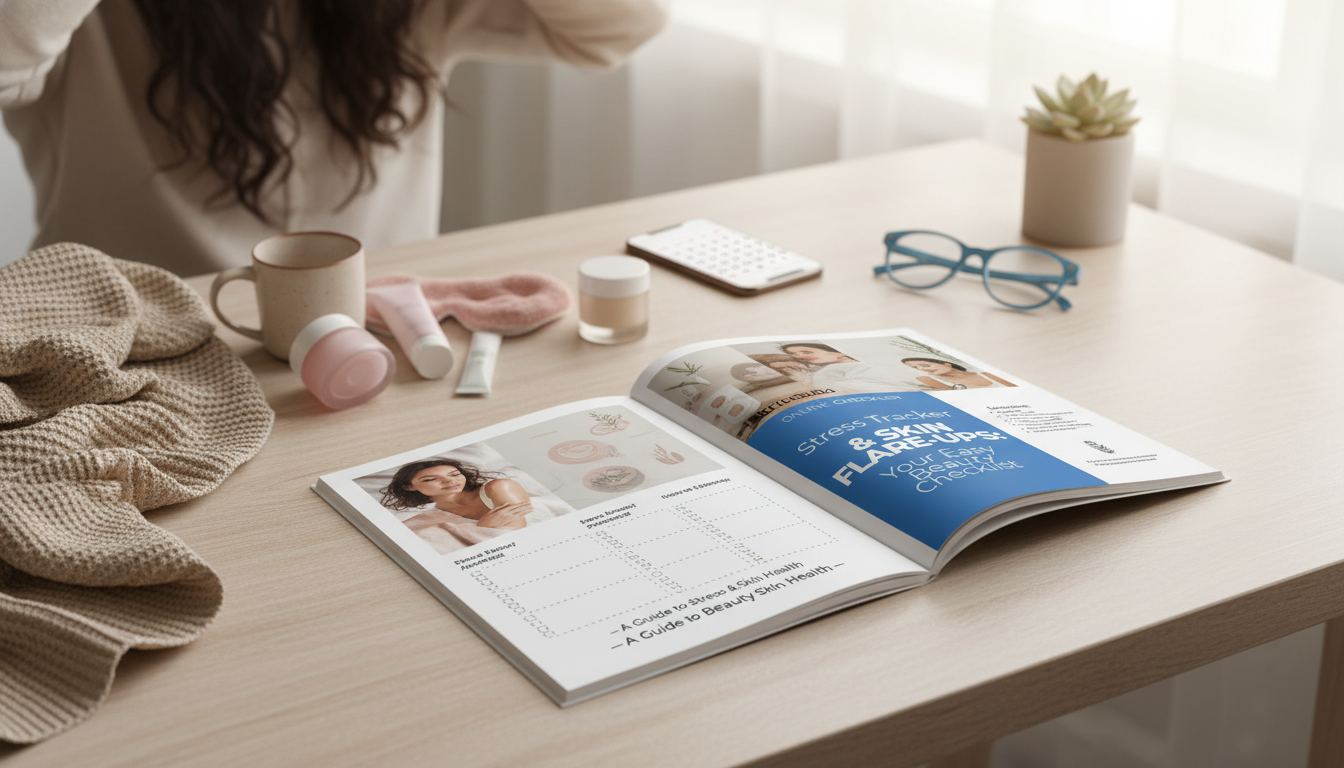
Stress Tracker & Skin Flare-Ups: An Easy Beauty Checklist for Calmer Skin
Stress can show up on the skin as sudden breakouts, redness, itching, dullness, or flare-ups of ongoing concerns. A simple tracker helps connect patterns between stressful moments, sleep, food, hormones, and skincare—so routines become more consistent and triggers become easier to spot. This checklist-style approach keeps daily notes quick, focused, and realistic, while supporting a healthier-looking barrier over time.
Why stress often shows up on the face first
Skin is responsive to what’s happening inside the body, and stress can tilt the balance toward reactivity. Stress-related hormone shifts may influence oil production, inflammation, and barrier function—three factors that can make the face look and feel “off” before anything else does.
- Stress hormones can influence oil production, inflammation, and the skin barrier, making skin more reactive.
- Stress can worsen common issues like acne, eczema, psoriasis, and rosacea by amplifying inflammation and itch-scratch cycles.
- Stress frequently changes habits (sleep, hydration, comfort foods, touching the face), which can indirectly drive flare-ups.
- Barrier disruption can increase sensitivity to products that normally feel fine.
For a deeper look at the stress-skin connection, see Harvard Health Publishing and the American Academy of Dermatology.
Common stress-skin patterns to watch for
Stress flare-ups are rarely random. Many people notice a few repeatable “scripts” that play out when life gets busy, sleep gets short, or routines get inconsistent.
- Breakouts after deadlines, travel, poor sleep, or high-sugar days.
- Redness or flushing that spikes with anxiety, heat, alcohol, or spicy meals.
- Dryness/tightness during long work stretches, cold weather, or over-cleansing.
- Itching or patches that correlate with stress, sweat, and friction (mask, collar, workouts).
- Dull tone and puffiness after short nights or high-salt meals.
If eczema is part of the picture, stress is a well-known trigger and can intensify itch and irritation. The National Eczema Association offers helpful context and support strategies.
The stress-to-skin tracking method (quick, not complicated)
A tracker works best when it’s short enough to use even on hectic days. The goal isn’t perfect data—it’s pattern recognition. Keep your notes brief and consistent so you can compare days without overthinking.
- Pick a consistent time: morning for baseline + evening for a 1-minute recap.
- Track only a few daily signals: stress level (1–10), sleep, hydration, movement, and skin status.
- Add one “variable” at a time (new product, active ingredient, supplement) to avoid confusion.
- Note location and type of flare (chin acne vs. cheek redness vs. eyelid irritation) to spot distinct triggers.
- Look for repeatable sequences: stress spike → poor sleep → barrier dryness → stinging with actives.
Daily Stress–Skin Check-In (copy/paste format)
| Day | Stress (1–10) | Sleep (hrs/quality) | Skin today (oiliness/dryness/redness/itch) | Possible triggers | What helped |
|---|---|---|---|---|---|
| Mon | 7 | 6 / restless | Redness + tightness | Late coffee, long screen time | Gentle cleanse + moisturizer, early bedtime |
| Tue | 4 | 8 / good | Calmer, less reactive | None noted | Sunscreen, hydration |
| Wed | 8 | 5 / poor | Chin breakout starting | Sugary snacks, touching face | Pimple patch, simplified routine |
If you prefer a ready-made format that keeps entries consistent, Stress Tracker & Skin Flare-Ups: Your Easy Beauty Checklist – A Guide to Stress & Skin Health is a simple, low-effort option you can reuse whenever your skin feels unpredictable.
Your easy beauty checklist for flare-up days
When skin is actively flaring, the fastest path back to “normal” is often less—not more. Treat flare-up days like a short reset: calm the barrier first, then rebuild.
- Simplify to essentials for 48–72 hours: gentle cleanser, bland moisturizer, sunscreen (daytime).
- Pause new products and strong actives if stinging, peeling, or sudden sensitivity appears.
- Choose barrier-friendly textures (cream/ointment) when tight, flaky, or itchy; lighter gel when oily but irritated.
- Avoid “stacking” exfoliants (scrubs + acids + retinoids) during high-stress weeks.
- Spot-treat thoughtfully: hydrocolloid patches for pimples; avoid harsh drying agents on already inflamed skin.
- Prioritize calming habits that reduce flare intensity: lukewarm showers, fewer hot tools, minimal fragrance.
Stress-aware routine building (so skin stays steady)
Long-term consistency matters more than chasing the “perfect” product. Stress-aware routines are built to hold steady during busy weeks, travel, or sleep disruptions.
Lifestyle signals that often predict a flare-up
A practical tool to make tracking effortless
For a “reset your habits” approach beyond skincare, some people pair skin tracking with stress-lowering routines they can actually keep. Options like Train Smarter and Make Your Gear Last – Sports Gear Care Guide can support a more consistent movement routine, while creative downtime (even short, screen-based breaks) can be made more intentional with tools like MidJourney Prompts for Realistic Images – Pro Guide.
When it’s time to get professional support
FAQ
How long does it take to see a pattern between stress and skin flare-ups?
Many people notice early clues within 2–4 weeks of consistent tracking, especially around sleep and hydration. Clearer patterns often show up by 6–8 weeks when only one new variable is introduced at a time.
What should be tracked each day if time is limited?
Track your stress level (1–10), sleep quality, a simple skin status (calm vs. irritated, plus breakout/redness/itch), and any standout trigger like a new product, heavy sweat day, alcohol, or poor hydration.
Should active ingredients be stopped during a stress flare?
If you notice stinging, peeling, or sudden sensitivity, simplifying temporarily can help the barrier recover, then actives can be reintroduced slowly once skin feels stable. If you’re using a prescribed treatment, check with a clinician before stopping it.











Leave a comment