Printable Perseverance Checklist: 10 Steps to Build Grit
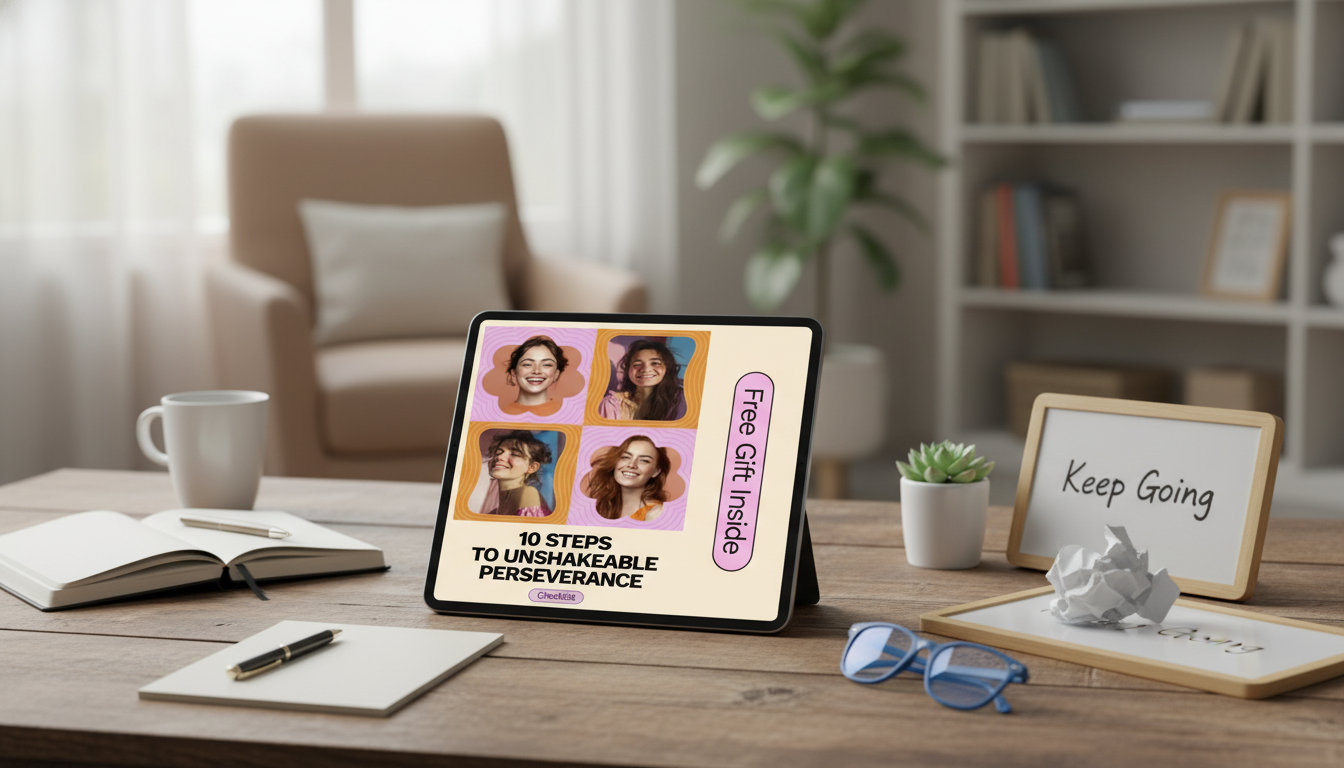
10 Steps to Unshakeable Perseverance: A Printable Checklist for Motivation and Grit
Perseverance isn’t a personality trait reserved for a lucky few—it’s a set of repeatable behaviors that can be practiced under pressure, fatigue, and doubt. This step-by-step checklist turns “keep going” into clear actions: what to do when motivation drops, how to recover after setbacks, and how to build grit through small, consistent wins.
What Unshakeable Perseverance Looks Like in Real Life
“Grit” is commonly defined as passion and perseverance for long-term goals, and resilience is the ability to adapt well in the face of adversity and stress. Both can be strengthened through habits, not heroic mood swings. (See: APA Dictionary of Psychology: Grit and American Psychological Association: Resilience.)
- Keeps commitments even when feelings change, using systems instead of willpower.
- Recovers quickly after setbacks by focusing on the next controllable action.
- Stays flexible on methods while staying firm on the goal (adaptation without quitting).
- Builds confidence through evidence: tracked effort, completed reps, and finished tasks.
- Handles discomfort with a plan: rest, regroup, re-engage—without self-judgment spirals.
The 10-Step Checklist (Use Daily or Weekly)
If you want a ready-to-print version you can keep on your desk or inside a planner, see 10 Steps to Unshakeable Perseverance – Printable Checklist for Motivation, Mindset & how to build grit and perseverance.
- Define the “why” in one sentence: connect the goal to a value (health, mastery, freedom, service).
- Pick the smallest non-negotiable action: the minimum that counts as “stayed on track” (5 minutes, one paragraph, one drill).
- Identify the main obstacle: name the recurring friction (time, fear, procrastination, distractions, perfectionism).
- Write an if–then plan: “If X happens, then I will do Y” to remove decision fatigue.
- Create a progress marker: choose one measurable indicator (sessions/week, pages, outreach attempts, practice reps).
- Schedule the next step (not the whole plan): put the next action on the calendar with a specific start time.
- Use a two-minute reset ritual: breathe, posture, short walk, water—then start the next tiny action.
- Reframe setbacks as data: ask “What failed—the goal or the method?” and adjust one variable.
- Build accountability: a check-in message, shared tracker, or weekly review with a trusted person.
- End with proof of effort: log what was done, what was learned, and the next smallest action.
Quick Reference: Step, Purpose, and a Simple Example
| Checklist step | Purpose | Example |
|---|---|---|
| Define your why | Stabilizes motivation | “I’m training to feel strong and capable.” |
| Minimum non-negotiable | Prevents all-or-nothing thinking | “10 minutes of practice counts.” |
| Name the obstacle | Targets the real friction | “Phone scrolling kills my start time.” |
| If–then plan | Automates the response | “If I miss a session, I do a 15-minute version tomorrow.” |
| Progress marker | Creates visible momentum | “3 focused sessions per week.” |
| Schedule the next step | Turns intention into action | “Tue 7:30 PM: 25 minutes.” |
| Two-minute reset | Breaks emotional inertia | “Water + 5 deep breaths + open laptop.” |
| Setback as data | Reduces shame and quitting | “Too ambitious—reduce scope, keep frequency.” |
| Accountability | Raises follow-through | “Text a friend after each session.” |
| Proof of effort | Builds grit through evidence | “Logged: 20 minutes; next: repeat tomorrow.” |
How to Use the Printable Checklist Without Burning Out
- Start with a 7-day sprint: prioritize consistency over intensity and aim to “keep the chain going.”
- Choose one hard thing and one easy thing: pair a challenging goal with a low-effort habit that reinforces identity as someone who follows through.
- Set a floor and a ceiling: the floor is your minimum non-negotiable; the ceiling is an optional stretch when energy is high.
- Use weekly reviews: take 10 minutes to circle what worked, cross out what didn’t, and pick one adjustment for next week.
- Plan recovery as part of perseverance: sleep, breaks, and rest days are inputs, not prizes you “earn.”
If your goal involves training or competition, consistency gets easier when the basics are frictionless (clean, ready, reliable equipment). A simple companion resource is Train Smarter and Make Your Gear Last – Sports Gear Care Guide, Digital Download eBook & Checklist for Athletes.
Mindset Shifts That Make Grit Sustainable
- From “motivation” to “momentum”: start small to generate proof, then let proof fuel confidence.
- From “perfect plan” to “next best step”: persistence grows when the next action is clear and doable.
- From “failure” to “feedback”: setbacks become useful when they point to a specific adjustment.
- From “self-criticism” to “self-coaching”: use neutral language—“What’s the next controllable action?”
- From “I have to” to “I choose to”: choice language increases ownership and reduces resentment.
Growth mindset research emphasizes that skills and capabilities can develop through effort, strategies, and support—especially after mistakes. That frame makes it easier to adjust methods without treating setbacks as a verdict on your potential. (See: Stanford Report: Carol Dweck on Growth Mindset.)
Common Sticking Points and Fast Fixes
Printable Tool: When to Use It (Morning, After a Setback, or Weekly Review)
A Simple Next Step
FAQ
How long does it take to build grit and perseverance?
Perseverance grows through repeated follow-through, so noticeable change often shows up after a 2–4 week consistency block. Keep the minimum non-negotiable small, track proof of effort daily, and make one adjustment during a weekly review.
What should be on a daily perseverance checklist?
Include a one-sentence “why,” today’s minimum non-negotiable, a specific start time, an if–then plan for your most common obstacle, a two-minute reset ritual, and a short log of what you did plus the next step.
What if motivation is gone and nothing feels possible?
Use the two-minute reset ritual first, then shrink the task to the smallest action you can complete without negotiation. Focus on keeping the “floor” habit to protect your identity as someone who follows through, even when intensity isn’t available.











Leave a comment