Minimalist Wardrobe Guide: Build a Stress-Free Closet
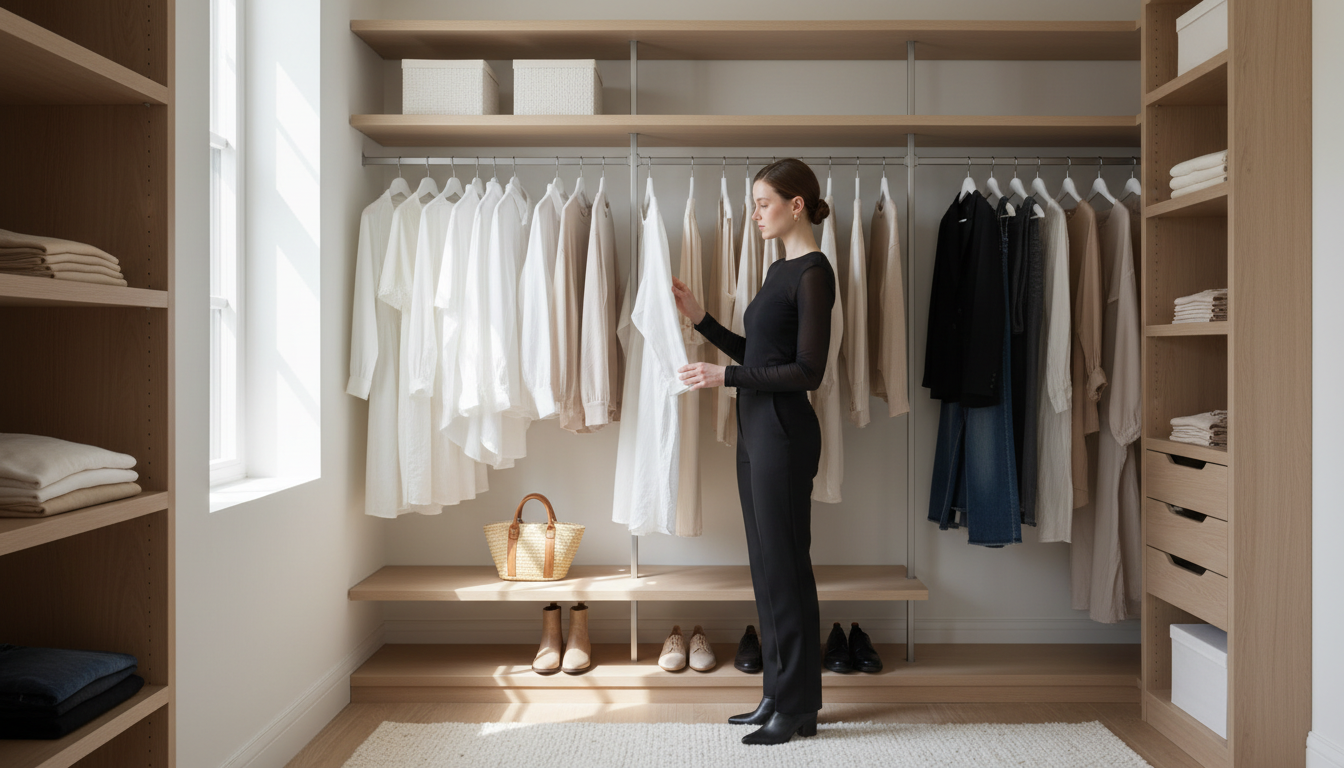
Minimalist Wardrobe: The Ultimate Guide to a Stylish, Stress-Free Closet
A minimalist wardrobe reduces daily decision fatigue while making outfits easier to mix, match, and repeat with confidence. The goal isn’t owning less for the sake of it—it’s owning the right pieces, in the right quantities, that fit lifestyle, climate, and personal style.
What a Minimalist Wardrobe Really Means
A minimalist wardrobe is a curated set of clothing that gets worn often, fits well, and supports real routines—workdays, weekends, events, and workouts. It’s less about strict numbers and more about removing friction from getting dressed.
- Fewer duplicates and “maybe someday” items; more intentional staples plus a small number of personality pieces.
- Versatility first: outfits built from repeatable formulas rather than one-off looks.
- Fit and comfort are non-negotiable, because the best capsule is the one that actually gets worn.
Start With a Closet Reset (Without Regret)
Before buying anything new, reset what you already own. This step is where minimalist wardrobes become realistic—because the closet starts reflecting your life as it is, not as it might be.
- Pull out everything and sort into: Keep (wear weekly), Maybe (needs tailoring/seasonal), and Let Go (doesn’t fit, itchy, rarely worn).
- Use a quick fit rule: if it’s uncomfortable at home for 10 minutes, it won’t be worn outside.
- Quarantine the “Maybe” pile in a box for 30 days; if nothing is missed, it can be donated or sold.
Define Your Style in 10 Minutes
Minimalism doesn’t have to look one way. A simple style snapshot keeps the wardrobe cohesive while still feeling personal.
- Pick 3 style words (examples: clean, relaxed, tailored; classic, modern, warm).
- Choose a base palette (2–4 neutrals) plus 1–2 accent colors that flatter skin tone and fit the existing wardrobe.
- Create an “outfit uniform” for common days (workday, casual day, errand day) to reduce morning choices.
If choosing colors feels tricky, focus on what repeats in your best outfits today: the jacket you always grab, the pants that always feel right, the shoes that go with everything. Build around those anchors.
How to Choose Pieces That Earn Their Space
Minimalist closets stay functional when every addition has a job. Use a simple standard: each item should be easy to wear, easy to care for, and easy to pair.
- Lifestyle match: each item should pair with at least 3 others already owned (tops-to-bottoms, layers-to-bases, shoes-to-outfits).
- Fabric and care: prioritize materials that feel good and match laundry habits (machine-washable if dry cleaning is unrealistic). For garment care basics, textile care standards can help decode labels more consistently.
- Fit-first rule: buy for the body today; tailor key items (trousers, blazer, coat) for a polished look with fewer pieces.
- Season and climate: plan by temperature range and layering needs, not by an idealized wardrobe.
Quick buying filter
| Question | Yes means | No means |
|---|---|---|
| Will it be worn within 7 days? | Fits current routine | Likely an impulse or fantasy item |
| Can it make 3 outfits with existing pieces? | High versatility | Hard to integrate |
| Is it comfortable for 10 minutes at home? | Realistic wear | Will stay in the closet |
| Is care manageable (wash/iron)? | Low friction upkeep | Higher chance of neglect |
How to Choose: Fabrics, Fit, and Finish (When You’re Replacing Essentials)
When the closet is edited down, quality signals matter more because items repeat often. A few practical checks can prevent “looks good on day one” pieces that fall apart by week three.
- Fabric feel and recovery: stretch knits should bounce back; denim should feel supportive, not flimsy; sweaters shouldn’t shed excessively or pill immediately.
- Construction: look for secure seams, aligned patterns/stripes, and buttons that feel firmly attached.
- Care realism: if an item requires special handling, make sure it matches your week. Consistency beats perfection. Helpful references on garment care labeling can be found through ISO’s textile care symbols guidance.
- Longevity mindset: wearing and maintaining clothing longer reduces overall impact; extending garment life is a practical sustainability lever noted by UNEP’s textiles report.
Build a Capsule That Still Feels Like You
A capsule is a starter structure—not a uniform. The sweet spot is a repeatable set of foundations with a few pieces that express taste.
Capsule starter template (adjust to lifestyle)
| Category | Suggested range | Notes |
|---|---|---|
| Everyday tops | 6–10 | Mix of tees, knits, blouses depending on routine |
| Bottoms | 4–6 | Jeans, trousers, skirt/shorts as needed |
| Layers | 3–5 | Cardigan, blazer, jacket, coat (climate-based) |
| Shoes | 3–5 | Everyday, dressier, weather-proof, optional sneakers/boots |
| One-piece options | 1–3 | Dress/jumpsuit for fast outfits |
| Accessories | 6–12 | Belt, bag, simple jewelry, scarf/hat (seasonal) |
Outfit Formulas That Make Getting Dressed Effortless
Declutter Without Rebound: Shopping Rules That Stick
When building habits, small, consistent rules tend to outperform big resets. For behavior-change fundamentals, see the American Psychological Association’s overview.
Care, Storage, and Simple Closet Systems
A 14-Day Minimalist Wardrobe Plan
FAQ
How many pieces should a minimalist wardrobe have?
A practical range is often 25–50 core pieces per season, but it depends on lifestyle, dress code, climate, and how often laundry gets done. Start with a capsule template, then adjust after 30 days of real wear data (what you reach for, what sits untouched).
Can a minimalist wardrobe still include color and trends?
Yes—use a neutral base for easy mixing, then add 1–2 accent colors and a limited “personality quota” of trend items that coordinate with your core. This keeps outfits fresh without making the closet harder to use.
What should be kept even if it’s not worn often?
Keep true occasion wear, climate-specific gear (like a heavy coat or rain shell), and sentimental pieces stored separately with clear boundaries. If it doesn’t fit or can’t be worn comfortably, it’s better as a memory box item than closet clutter.










Leave a comment