Hotel Upgrade Tips for Solo Travelers: Timing & Scripts
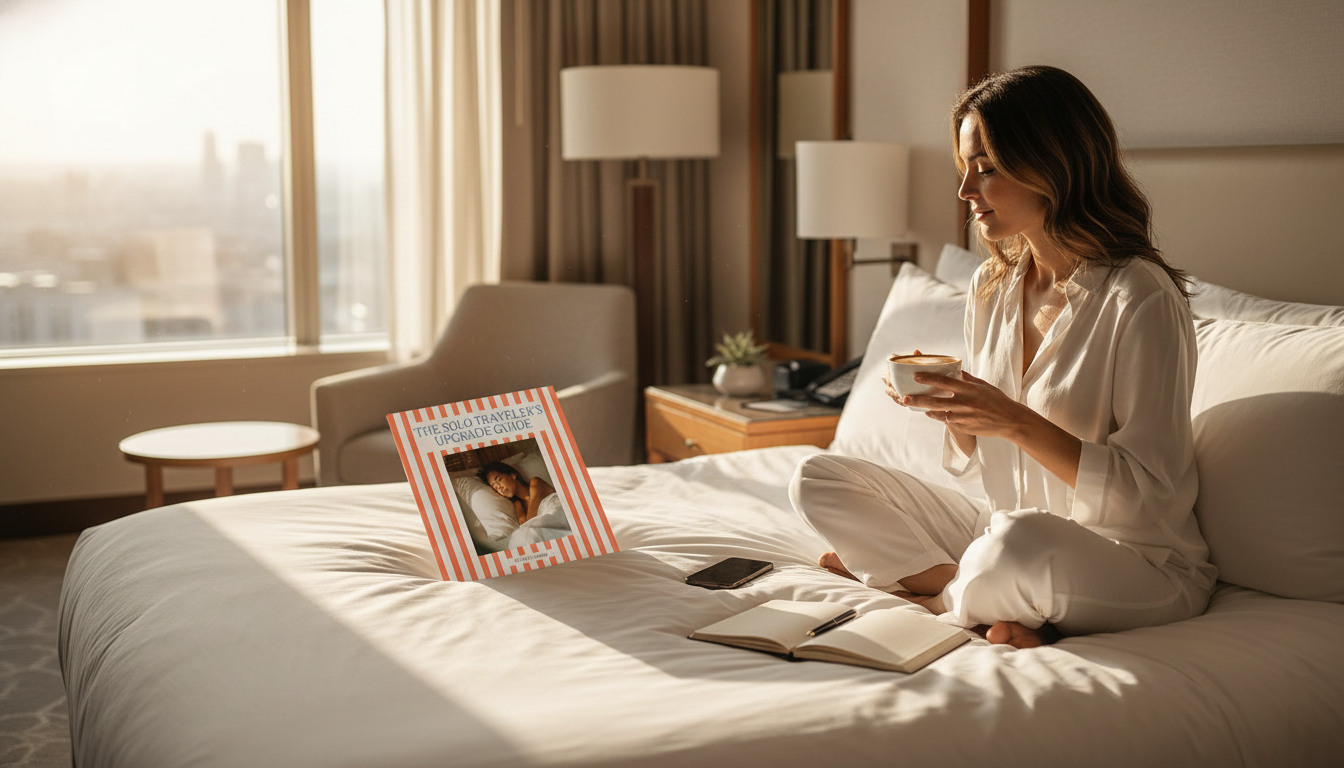
The Solo Traveler’s Upgrade Guide: Smart Booking, Timing, and Front Desk Psychology
Solo travelers can be surprisingly well-positioned for complimentary room upgrades—if the request is timed well, framed clearly, and aligned with how hotels allocate inventory. This guide breaks down the practical levers that most influence upgrades: when to book, when to arrive, what to say, what not to say, and how to make it easy for the front desk to say yes.
Why solo travelers can win upgrades more often than they expect
Upgrades aren’t usually a reward for “deserving” anything. They’re an operational decision: what rooms exist tonight, what needs protecting for tomorrow, and what assignment keeps the building running smoothly. Solo travel can fit that puzzle better than many people realize.
- Inventory fit: A single guest can be easier to move into a premium category without bedding or occupancy complications.
- Lower “risk” profile: Fewer noise complaints, simpler housekeeping, and less wear-and-tear perception can subtly help.
- Upgrade math: Hotels protect premium rooms for paid demand; when demand softens, a solo guest is a low-friction match.
- Mindset shift: The winning approach is availability + timing + a smooth interaction, not “status speeches” or pressure.
How hotels decide who gets upgraded
Most properties follow a priority stack—some automated, some manual. Knowing what typically matters lets you steer your booking and your ask toward “easy yes” territory.
- Priority stack: Loyalty status, special occasions, length of stay, rate type, and operational needs (maintenance blocks, overbooking, room balance).
- Rate rules: Some discounted or third-party bookings limit upgrades; direct bookings often allow more flexibility.
- Stay length trade-off: One-night stays can be easier; long stays can be harder if premium rooms may sell later.
- What the desk can actually do: Some hotels can freely adjust room type; others have strict category and revenue controls.
Common factors that influence upgrade decisions
| Factor | Why it matters | Solo traveler advantage |
|---|---|---|
| Loyalty status | Automated and manual upgrade priority | Even low-tier status can tip close calls |
| Booking channel | Direct bookings often have more flexibility | Direct + polite request is a strong combo |
| Check-in timing | Late-day visibility of true availability | Solo itineraries are often more flexible |
| Length of stay | Premium rooms are protected for future nights | One-night stays can be easiest to move |
| Room type requested | Simple moves are easier than complex bed configurations | One guest fits many room layouts |
Smart booking moves that set up an upgrade before arrival
Upgrades start before check-in. The goal is to pick a reservation that gives the hotel room to maneuver, then send signals that you’re low-maintenance and flexible.
Timing strategy: when upgrades become most likely
Timing playbook for upgrade requests
| Moment | What’s happening operationally | Best move |
|---|---|---|
| 24–72 hours before arrival | Pre-assignments begin; some inventory still uncertain | Send a brief preference note; avoid demanding language |
| Morning of arrival | Housekeeping schedule + early assignments | Confirm arrival time; ask about paid upgrade offers if interested |
| Peak check-in (3–7pm) | Lines, stress, tight decisions | Keep it quick; ask politely and accept a no gracefully |
| After peak (7–10pm) | No-shows clearer; unsold premium rooms more obvious | Make the upgrade request when availability is most visible |
| At checkout | Service recovery and retention are on the mind | If disappointed, give calm feedback; it can help future stays |
Front desk psychology: how to ask without triggering resistance
Request phrasing that tends to work better
| Goal | Try saying | Avoid saying |
|---|---|---|
| Polite upgrade check | “If anything nicer is available, would you be able to upgrade me today?” | “I need an upgrade.” |
| Leverage flexibility | “I’m flexible on floor and view—whatever is easiest.” | “Only a suite will do.” |
| Handle a no gracefully | “No worries at all—thanks for checking.” | “That’s unacceptable.” |
| Open paid alternatives | “If there’s a discounted upgrade offer, I’d love to hear it.” | “Free only or nothing.” |
On-property moves that quietly increase your odds
Common mistakes that reduce upgrade chances for solo travelers
Turn these tactics into a repeatable system
If you want a single reference you can reuse before every trip, see The Solo Traveler’s Upgrade Guide (ebook). For travelers who also create content and want lifelike visuals for itineraries or thumbnails, MidJourney Prompts for Realistic Images – Pro Guide is a quick, practical download. If you’re frequently on the road for training or events, Train Smarter and Make Your Gear Last – Sports Gear Care Guide can help keep essentials in shape between trips.
For deeper context on how hotels operate and how loyalty policies can affect benefits, review guidance from the American Hotel & Lodging Association (AHLA) and the terms for major programs like Marriott Bonvoy and World of Hyatt.
FAQ
Do solo travelers actually get free hotel upgrades more often?
Sometimes—mostly because a single guest can be easier to place into an open premium room without creating bedding or occupancy issues. Upgrades still depend on availability, property policy, booking channel, and how (and when) you ask.
Is it better to ask for an upgrade at check-in or before arrival?
A light pre-arrival note can help set preferences, but the strongest moment to ask is usually at check-in, when the desk has a clearer picture of no-shows and unsold inventory. If possible, ask after the busiest rush for the most accurate availability.
What should be said if the front desk says no?
Thank them for checking and keep it warm: “No worries at all—thanks for looking.” Then pivot to smaller wins like a quieter room, higher floor, better view, or late checkout instead of pressing for a category jump.
















Leave a comment