Highway Car Breakdown: Safety Steps, Calls & Checklist
Car Breaks Down on the Highway: Stay Safe, Get Help, and Get Moving Again
A breakdown at highway speeds can turn dangerous fast. The priority is to get out of moving traffic, stay visible, and make smart decisions while help is on the way. The steps below cover daytime and nighttime stops, bad weather, and common scenarios—plus a printable-style checklist you can keep in the car.
First 60 seconds: reduce risk immediately
- Signal early, ease off the accelerator, and steer toward the right shoulder. Avoid sudden braking if traffic is close behind you.
- Turn on hazard lights immediately. At night, briefly turning on your interior dome light can improve visibility if you must exit in a dark area.
- Aim for the safest stopping spot available: a wide shoulder, emergency pull-off, or exit ramp. Avoid stopping on curves, bridges, or narrow shoulders when possible.
- If the car is still rolling, keep momentum to reach a safer area. A flat, wide shoulder is often safer than a tight median.
- Once stopped, set the parking brake, shift into Park (or 1st gear for manual), and turn wheels away from traffic if you’re on a slope.
Where to stop: shoulder, exit, or stay moving?
The goal is to leave the travel lanes as quickly and smoothly as you can—without creating a new hazard. If you’re close to an exit and the car still has power, taking the exit is usually safer than sitting on the shoulder.
If the shoulder is extremely narrow or visibility is poor (hill crest, sharp curve), and the vehicle can continue without overheating or losing control, it can be smarter to creep forward with hazards on to reach a wider, more visible area.
Stopping choice quick guide
| Situation | Best move | Notes |
|---|---|---|
| Car still drives normally but warning light appears | Take next exit or safe pull-off | Avoid stopping on narrow shoulders; monitor temperature and steering feel |
| Loss of power but car rolls | Coast to the widest shoulder available | Keep hazards on; avoid sudden lane changes |
| Flat tire at speed | Slow gradually, keep steering steady, pull to shoulder | Do not slam brakes; reduce speed smoothly |
| Smoke or burning smell | Stop as soon as safely possible and shut off engine | Move away from the vehicle; call emergency services if fire risk |
| Stopped in a blind spot (curve/hill) | If possible, creep to a more visible area | Only if the vehicle can move safely; otherwise stay alert and visible |
Make the scene safer: visibility, positioning, and passengers
- Keep hazard lights on. If you have reflective triangles or flares and conditions allow safe placement, use them to give drivers earlier warning.
- If it’s safe to exit, leave from the passenger side (away from traffic) whenever possible.
- Move passengers to a safer location: behind a guardrail and well away from the roadway. Keep children close and supervised.
- If staying in the car is safer (heavy traffic, narrow shoulder, unsafe to exit), remain buckled with doors locked and stay alert for approaching vehicles.
- In low visibility, use a flashlight to be seen. Avoid standing between the car and traffic or near the lane line.
Call for help: who to contact and what to say
- If there is immediate danger (fire, crash, injuries, or your car is partially in a lane), call emergency services first.
- For routine breakdowns, contact roadside assistance, a towing company, or your insurer’s roadside line. If your vehicle has a built-in emergency/telematics button, use it.
- Share clear location details: highway name/number, direction of travel, nearest exit, mile marker, landmark, and which side of the road/shoulder you’re on.
- Describe the vehicle (make/model/color), what you’re noticing (warning lights, noises, vibrations), and hazards (smoke, leaking fluid, no shoulder).
- Conserve phone battery while waiting: lower brightness, close background apps, and keep the charger plugged in.
For more general roadway safety guidance, see NHTSA road safety resources and AAA roadside safety tips.
Common breakdown scenarios: what to do next
Night, rain, snow, and heat: adjust the plan
For changing weather hazards and safety guidance, check National Weather Service safety information.
Emergency roadside kit essentials
Printable-style emergency roadside checklist
Keep a ready-to-use checklist on your phone
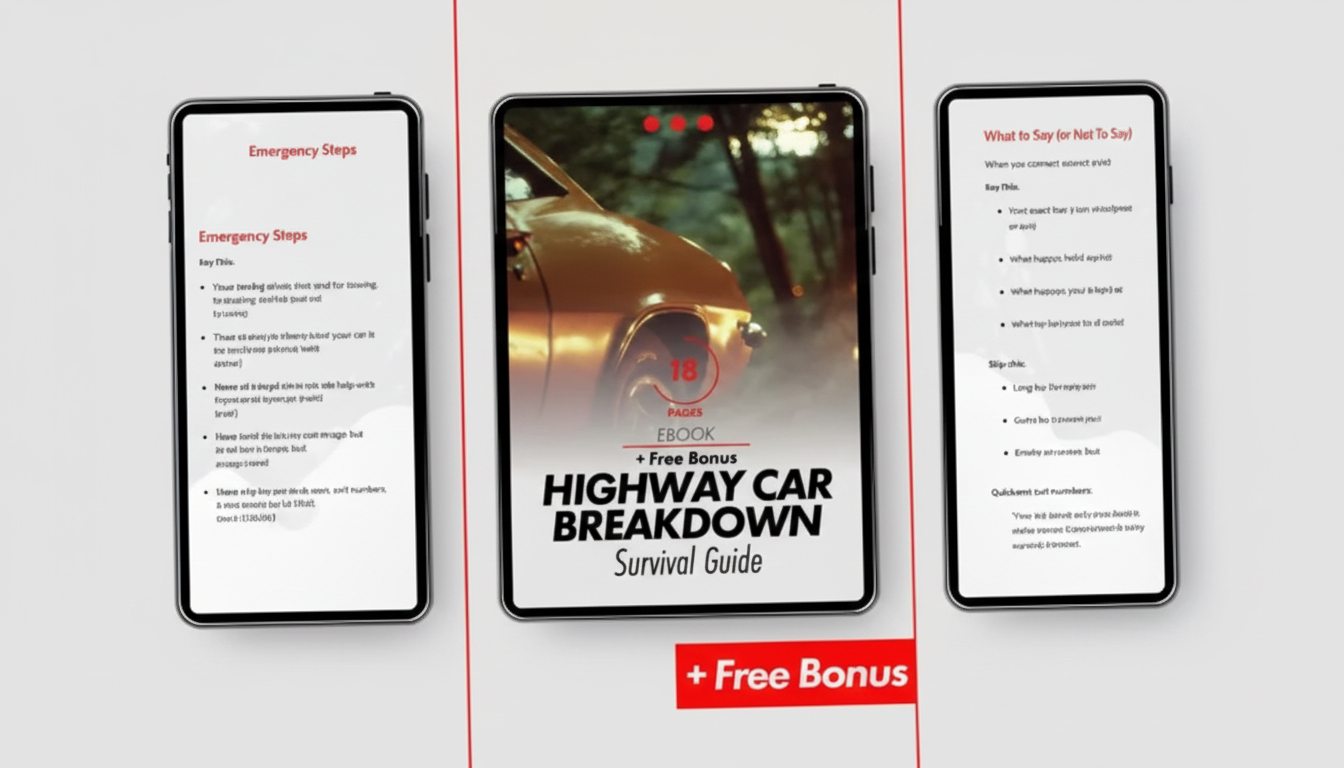
If you want a ready-made, step-by-step format you can save for quick access, consider the Highway Car Breakdown Survival Guide (ebook emergency roadside checklist).
For families juggling a lot on the road, a simple planning system can also make emergency prep easier to maintain over time. The A Single Parent’s Smart Guide to Getting More Done can help build routines for keeping chargers, documents, and go-bags consistently stocked.
FAQ
Is it safer to stay in the car or get out on the highway shoulder?
It depends on shoulder width, traffic speed, and whether you can exit away from traffic. If you can safely get behind a guardrail, that’s often safer; if exiting puts you near fast-moving traffic, staying belted with hazards on may be the better option.
What information should be shared when calling roadside assistance on a highway?
Share the highway number/name, your direction of travel, nearest exit, mile marker, and which side of the road you’re on. Add your vehicle’s make/model/color plus symptoms and any hazards like smoke, fluid leaks, or a very narrow shoulder.
Should a tire be changed on the highway shoulder?
If the shoulder is narrow, the ground is unstable, or traffic is close and fast, waiting for roadside assistance is usually safer. Only change a tire when there’s ample space, clear visibility, and you can work well away from the lane line.








Leave a comment