Fender Bender: When to Call Police (Quick Checklist)
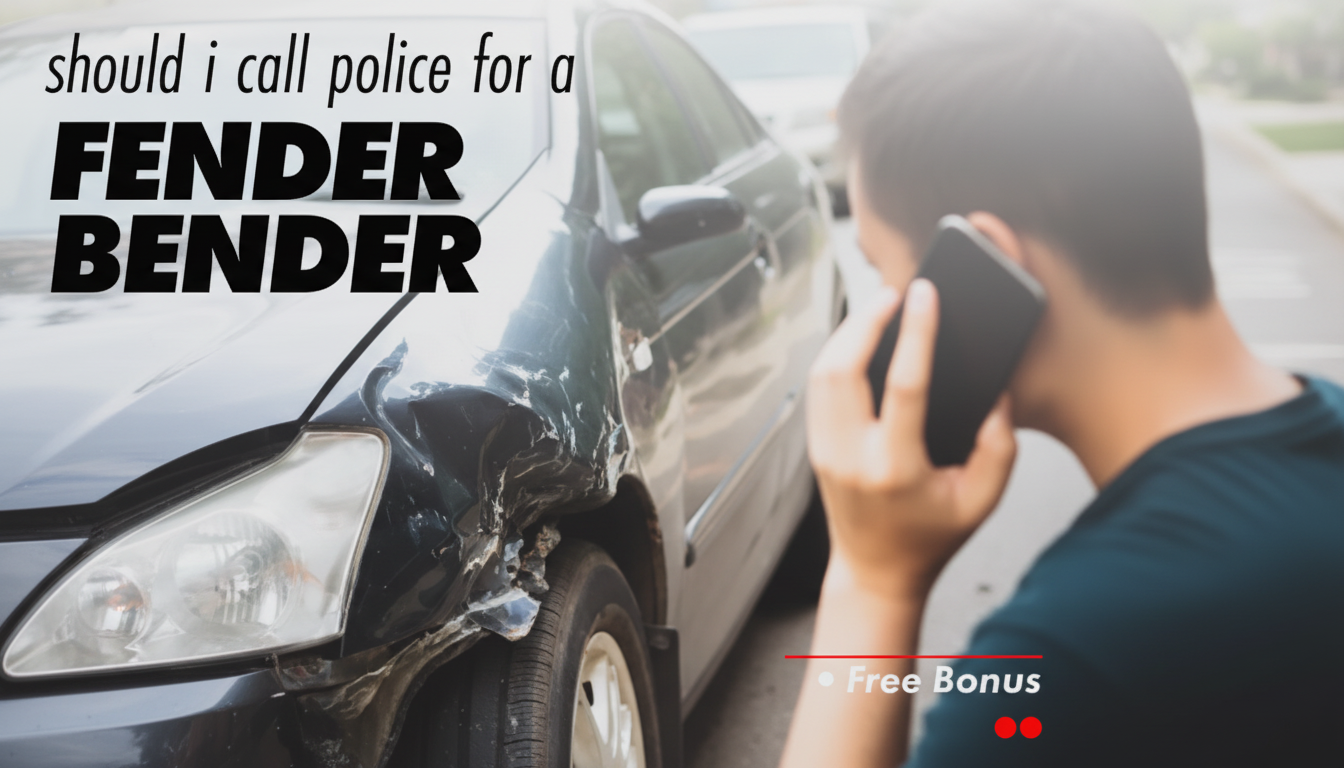
A minor collision can feel confusing in the moment—especially when nobody seems hurt and the damage looks small. The safest choice depends on injuries, safety hazards, local reporting rules, and whether the other driver cooperates. Use the checklist below to make a quick, confident decision and protect yourself legally and financially.
Immediate safety steps before deciding anything
- Check for injuries (you, passengers, the other driver, pedestrians). Call 911 immediately if anyone may be hurt, even if symptoms seem “minor.”
- Move to a safer spot if possible (shoulder, parking lot) to reduce the risk of a secondary crash; turn on hazard lights.
- If vehicles can’t be moved, stay buckled when safe to do so and get occupants out of traffic lanes and behind a barrier if available.
- Look for hazards: fuel leaks, smoke, downed wires, blocked intersections, poor visibility, or aggressive behavior.
Safety decisions come first. A low-speed bump can still trigger delayed pain, a leak, or a dangerous traffic backup—so treat the first two minutes as a safety drill, not a negotiation.
A quick decision guide: when calling the police is the right move
- Call police/911 if there are injuries, suspected injuries, or any medical complaint (including dizziness, neck/back pain, or confusion).
- Call if the crash is blocking traffic, creates a road hazard, involves a commercial vehicle, or happens in an intersection where safety control is needed.
- Call if there’s serious visible damage (airbags deployed, a vehicle can’t be driven, fluids leaking) or property damage beyond the vehicles (guardrails, signs, fences, parked cars).
- Call if the other driver appears impaired, is acting aggressively, refuses to exchange information, or tries to leave.
- Call if identity/insurance seems questionable (no license, no insurance, mismatched vehicle info).
| Situation | Recommended action | Why it matters |
|---|---|---|
| Anyone injured or feels unwell | Call 911 immediately | Creates a medical record and ensures prompt care |
| Vehicles blocking traffic / unsafe location | Call police/non-emergency (or 911 if urgent) | Traffic control reduces risk of another collision |
| Other driver won’t cooperate or may flee | Call police | Report supports later claims and accountability |
| Only minor cosmetic damage and both drivers cooperative | Consider non-emergency report or self-report (varies by state) | Some areas allow exchange of info without dispatching an officer |
| Damage to public property (sign, barrier) | Call police | Often legally required and helps document liability |
If you’re torn, choose the option that creates the clearest record. A brief call can clarify whether an officer will respond, whether you should file online, and what number to reference later.
When police may not come—and what to do instead
- Many departments prioritize injuries and hazards; for minor damage on private property or low-risk situations, an officer may not be dispatched.
- Ask the dispatcher about alternatives: an incident number, online reporting, or making a report at a local station.
- If required by your state, file a driver crash report within the deadline even if no officer responded.
- Keep notes of the time, location, and the dispatcher guidance; save any incident/call reference number.
Even without an on-scene response, the goal stays the same: create a timestamped trail (photos, notes, and a report reference) that supports your insurance claim if details are later disputed.
What to say when calling: keep it brief and factual
- Share location details: street names, mile markers, nearest intersection, landmarks; mention if vehicles are on the roadway.
- State whether anyone is injured or requesting medical evaluation.
- Describe hazards: leaking fluid, smoke, disabled vehicles, blocked lanes, aggressive behavior, suspected impairment.
- Avoid admitting fault or speculating; stick to observable facts.
Clean, factual communication helps dispatchers send the right help and keeps your statements consistent if you later need to explain what happened to an insurer.
On-scene documentation checklist that protects your claim
| Item | What to capture | How |
|---|---|---|
| Driver info | Name, license, contact | Photo + note |
| Insurance | Company, policy # | Photo of card |
| Vehicle | Plate, make/model, VIN (if visible) | Wide + close photos |
| Scene | Road, signs, lane layout | Panorama video |
| Damage | All angles, inside cabin if relevant | Multiple photos |
For a printable version you can keep with your registration and insurance card, see Should I Call Police for a Fender Bender? | Essential Checklist for Drivers. If you like keeping quick-reference guides in your car or gym bag, Train Smarter and Make Your Gear Last – Sports Gear Care Guide is another simple checklist-style download for staying organized.
After you leave: reporting, repairs, and follow-up
For additional official guidance on what to do after a crash, consult NHTSA, the Insurance Information Institute, and the NAIC. These resources also help explain why documentation and timely reporting matter—even when the damage looks small.
A printable checklist to keep in the glovebox
FAQ
Do you have to call the police for a minor fender bender?
Requirements vary by state and city, and they can depend on injuries, where the crash happened, and damage thresholds. When you’re unsure, calling the non-emergency line (or 911 if it’s urgent) can confirm whether an officer will respond or whether you should file online/self-report.
What if the other driver refuses to share insurance or tries to leave?
Call the police immediately and focus on safety and documentation. If you can, note the license plate, vehicle description, and direction of travel, and gather witness contact info—without chasing the other driver or escalating the situation.
Will my insurance claim be denied if there’s no police report?
Many claims can proceed without a police report when both parties cooperate and your documentation is strong. A report can be helpful when facts are disputed, so notify your insurer promptly and provide clear photos, notes, and any incident number you were given.











Leave a comment