Crystal & Glass LED Wall Chandelier for Hotel-Chic Glow
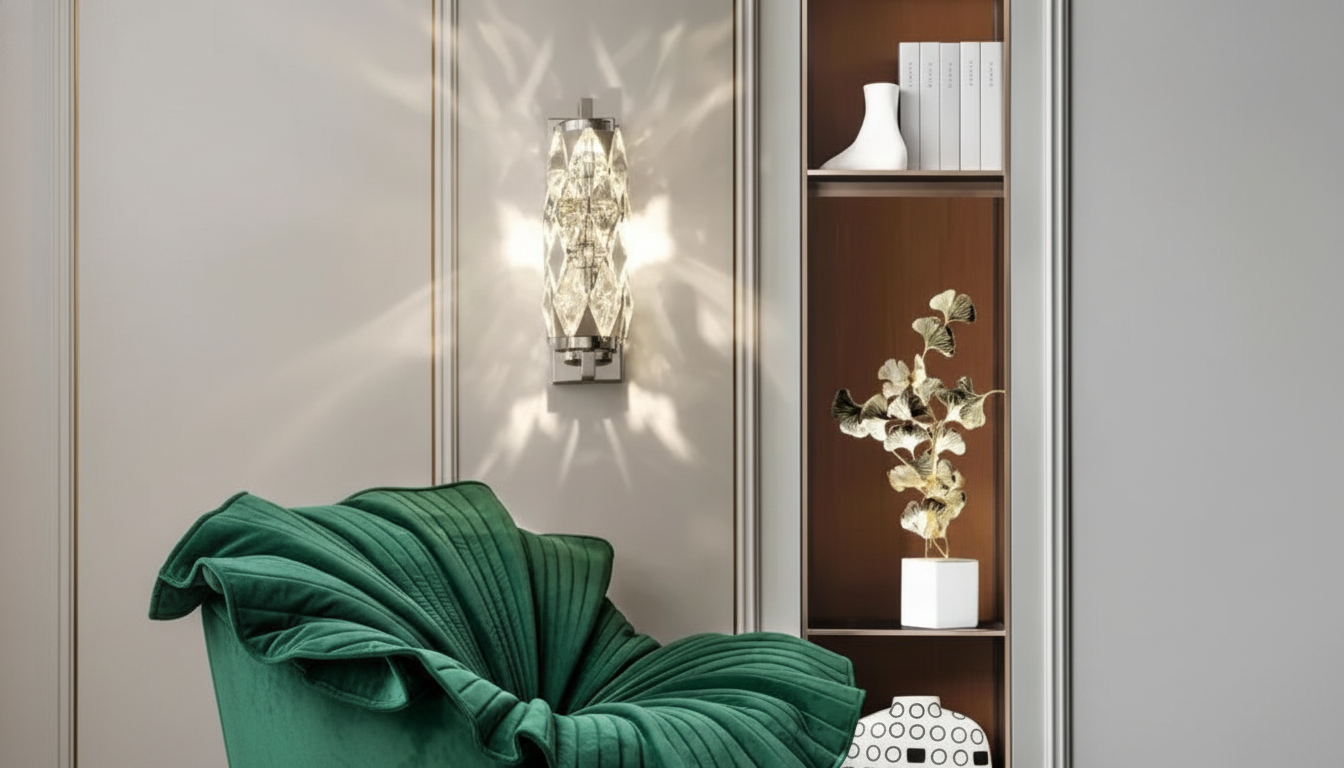
Luxurious Crystal & Glass LED Wall Chandelier: Boutique-Hotel Elegance for Modern Interiors
A crystal-and-glass wall chandelier can turn an everyday wall into a signature design moment—adding sparkle, soft diffusion, and that “boutique-hotel” polish without claiming floor space. Whether it’s a narrow hallway that needs rhythm, a bedside wall that deserves more than a table lamp, or a dining nook that needs depth after dark, the right wall-mounted chandelier delivers atmosphere and architectural presence in one move. Below are practical considerations for placement, light comfort, materials, installation, and care so the finish stays brilliant for years.
What Makes a Crystal & Glass Wall Chandelier Feel Truly Luxurious
Luxury lighting usually reads as luxury for one simple reason: the light looks expensive. Crystal and glass create that effect through texture and control.
- Refraction and sparkle: Crystal elements break and scatter light into crisp highlights. Even at modest brightness, those micro-reflections add depth and a high-end shimmer.
- Glass diffusion: Well-layered glass can soften glare and spread light more evenly, creating a smooth ambient glow rather than harsh hotspots.
- Wall-mounted presence: A wall chandelier has the drama of a small chandelier while keeping ceilings visually clean—especially helpful in rooms with low ceilings or busy overhead architecture.
- LED efficiency: LED lighting typically produces less heat and uses less energy than many traditional lamp types. For background on LED benefits, see the U.S. Department of Energy LED overview.
Best Rooms and Placements (With a Boutique-Hotel Look)
Placement is where wall chandeliers really earn their keep. The goal is a tailored, intentional composition—like a well-styled hotel corridor or a layered suite.
- Entryway or corridor: Install in pairs to create a gallery-like rhythm. Repetition instantly feels “designed,” especially when aligned with art or molding.
- Bedside alternative: Replace table lamps with wall-mounted chandeliers to keep nightstands clear and elevate the headboard wall. This also frees surface space for books, trays, or decor.
- Dining accent: Flank a sideboard or bar cabinet to create a lounge-style glow that complements overhead lighting rather than competing with it.
- Staircase landings: Add sparkle where daylight shifts through the day; crystal’s reflections change beautifully from morning to evening.
- Height guideline: Aim for a visually centered placement around eye level when standing, while ensuring head clearance in tighter walkways. In narrow corridors, keep the fixture shallow enough that it doesn’t feel intrusive.
Light Quality: Brightness, Color Temperature, and Comfort
Crystal can amplify light, which is part of the charm—but comfort matters. A beautiful wall chandelier should be easy on the eyes from multiple angles.
- Warm vs. cool tone: Warm white (often around the soft-warm range) tends to flatter crystal reflections and reads inviting. Cooler tones feel sharper and more contemporary, but can look stark in bedrooms and relaxed living spaces.
- Glare control: Prioritize diffused glass and thoughtful positioning so the brightest source isn’t in direct sightlines (especially beside beds or near seating).
- Layered lighting: Combine wall chandeliers with ceiling, recessed, or cove lighting to balance ambient illumination with accent sparkle. Guidance on lighting quality and good practice is available through the Illuminating Engineering Society (IES).
- Dimming readiness: If a dimmer is part of the plan, confirm LED driver and dimmer compatibility. Smooth dimming makes it easier to shift from practical light to evening ambiance without changing fixtures.
Materials and Craft Details to Look For
- Crystal clarity and cut: Cleaner material and sharper cuts create more defined sparkle and more “pinpoint” highlights instead of dull shine.
- Glass thickness and finish: Thicker, evenly finished glass tends to feel more substantial and resists looking cloudy over time.
- Metal framework: Look for solid mounting points, tight joins, and a finish that matches nearby hardware (brass, chrome, black, etc.) for a cohesive room story.
- LED components: Higher-quality drivers can reduce flicker and keep output stable. For safety assurance, it’s also worth understanding certification expectations from organizations like UL.
Quick Checklist for Comparing Wall Chandeliers
| Detail | Why it matters | What to prioritize |
|---|---|---|
| Crystal/Glass quality | Controls sparkle and diffusion | Clear, well-cut crystal; smooth, evenly finished glass |
| Light comfort | Prevents harsh hotspots | Diffused optics; low-glare placement |
| Mounting and weight support | Safety and stability | Secure bracket, solid anchors, appropriate wall box |
| Dimming and controls | Sets mood and usability | Compatible dimmer/driver and stable low-level output |
| Maintenance needs | Keeps it looking new | Accessible surfaces; finishes that resist fingerprints |
Installation and Safety Essentials
Care and Cleaning to Keep Crystal Sparkling
Featured Piece: Luxurious Crystal & Glass LED Wall Chandelier
If the goal is a refined, modern take on classic sparkle, the Luxurious Crystal & Glass LED Wall Chandelier is designed to deliver statement-level presence with a controlled, polished glow. Crystal sparkle adds dimension, while glass diffusion helps keep the light comfortable—ideal for hallway pairings, bedside installs, and dining accents where atmosphere matters as much as brightness.
More In-Store Finds (In Stock)
- MidJourney Prompts for Realistic Images – Pro Guide (Digital Download)
- Train Smarter and Make Your Gear Last – Sports Gear Care Guide (Digital Download)
- Real Pet Wisdom, From Owners (eBook)
FAQ
Can a wall chandelier provide enough light for a room?
It can provide excellent ambient or accent light, depending on the fixture’s output and placement. For full-room illumination, wall chandeliers typically work best as part of layered lighting alongside ceiling or recessed lights.
Is a crystal-and-glass wall chandelier hard to maintain?
Maintenance is usually straightforward: regular dusting plus occasional spot-cleaning keeps crystal and glass clear. Wall mounting can make access easier than ceiling fixtures, especially for quick touch-ups.
Do LED wall chandeliers work with dimmer switches?
Many do, but smooth dimming depends on the LED driver and the specific dimmer type being compatible. Confirm the fixture’s dimming specifications and use a properly rated dimmer to avoid flicker or limited dim range.










Leave a comment