AI Skin Check Workflow: Document Symptoms, Spot Red Flags
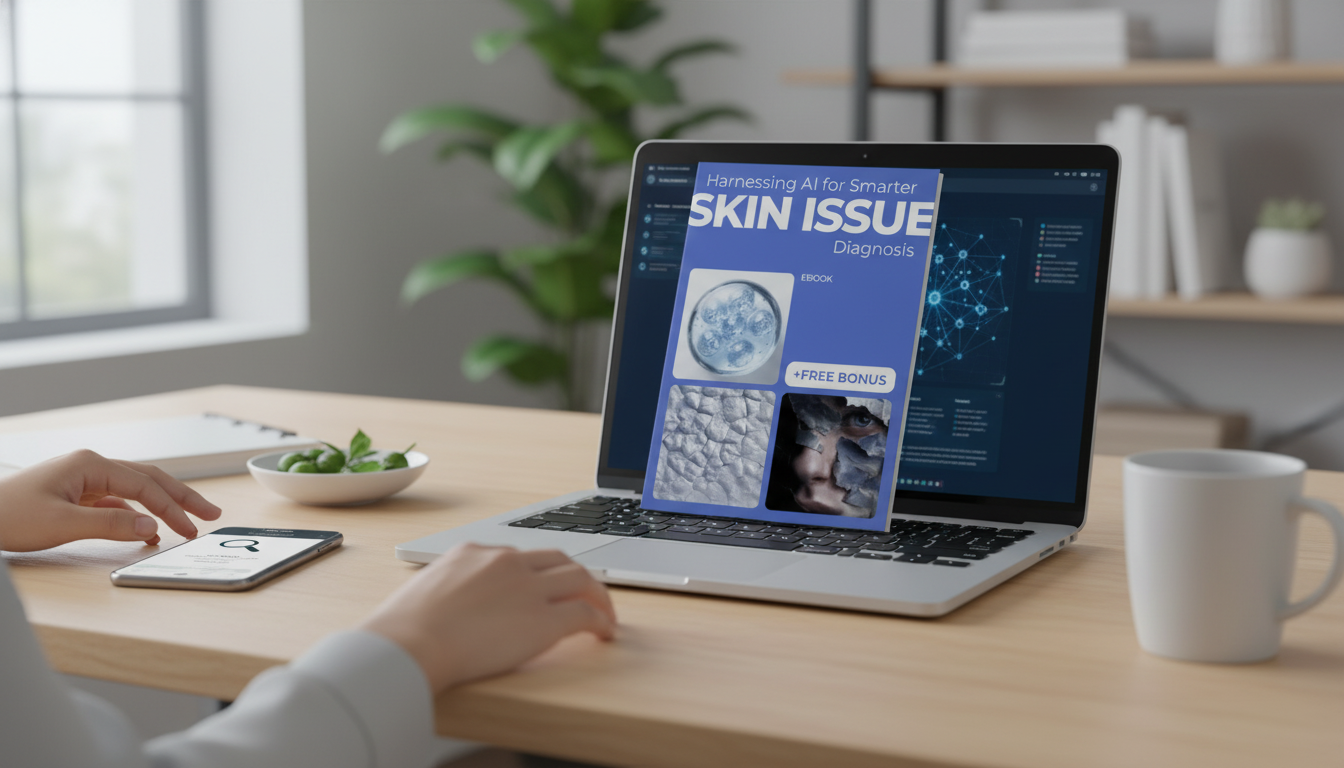
Harnessing AI for Smarter Skin Issue Diagnosis: A Practical Guide for Everyday Use
AI tools can help organize symptoms, compare patterns, and suggest questions to ask—but they do not replace a clinician’s exam, medical history, or lab testing. Used carefully, AI can act like a structured notebook: turning scattered observations into clearer timelines, better photos, and more focused conversations with a dermatologist. This guide lays out a safe, repeatable workflow for documenting skin concerns, interpreting patterns responsibly, and deciding when to seek professional care.
What AI Can (and Can’t) Do for Skin Concerns
When skin changes show up, it’s tempting to look for a single definitive label. AI works better when it’s treated as an organizer and pattern-finder, not a verdict.
- Useful for: organizing observations, tracking changes over time, generating discussion-ready possibilities, and improving the quality of information you share at appointments.
- Not reliable for: confirming a diagnosis, ruling out serious conditions, estimating skin cancer risk from a single photo, or replacing patch testing/biopsy when needed.
- Accuracy depends on: image quality, lighting, representation of different skin tones in training data, symptom context, and whether the tool is medically validated. The FDA has specific oversight considerations for AI/ML software used as medical devices, which is different from general-purpose tools (FDA guidance overview).
- Best mindset: AI as a “structured second set of notes,” not a final answer.
A Safe, Repeatable Workflow for AI-Assisted Skin Checks
Consistency is what makes your notes useful. This workflow is designed to be repeatable, especially during flare-ups or when evaluating a new product.
Step 1: Define the goal
Choose one: symptom tracking, a routine irritation check, a product reaction review, or preparing for a dermatology visit. Clear goals reduce overinterpretation and keep the AI output practical.
Step 2: Capture standardized photos
Take photos in the same lighting, distance, and angle. Include a reference object (ruler or coin) and avoid heavy filters or “beauty” modes. If redness shifts dramatically between photos, retake using indirect daylight.
Step 3: Record context
Write down onset date, itch/pain level, spreading pattern, and recent exposures: new products, sun exposure, shaving/waxing, intense exercise, travel, pets, and medications (including supplements).
Step 4: Use AI to summarize patterns and generate questions
Ask for a timeline summary, likely triggers, and what to monitor next—such as whether bumps are linked to sweat and friction, or whether dryness worsens after certain cleansers.
Step 5: Set decision thresholds for escalation
Step 6: Re-check progress consistently
How to Ask AI Better Questions Without Getting Misled
Common Skin Patterns AI Often Confuses—and How to Reduce Errors
Quick guide to common look-alikes and what to document
| Often confused | Clues that help distinguish | What to track for 7 days |
|---|---|---|
| Eczema vs. contact dermatitis | New product/exposure, sharp borders, burning vs. itching | New soaps/cosmetics, patch location map, itch score, moisturizer use |
| Acne vs. folliculitis | Uniform bumps, itch, linked to sweating/shaving | Workout timing, shaving routine, friction points, lesion types (whitehead vs. pustule) |
| Fungal rash vs. eczema | Ring-like shape, central clearing, worse in warm/moist areas | Sweat, occlusive clothing, scaling pattern, response to gentle drying |
| Rosacea vs. acne | Flushing triggers, central face redness, stinging with products | Trigger log (heat/spice/alcohol), baseline redness photos, sensitivity notes |
When to Skip AI and Seek Care Promptly
- Urgent symptoms: facial or lip swelling, trouble breathing, widespread blistering, rapidly spreading redness, high fever, severe pain, or signs of infection (warmth, pus, red streaks).
- Concerning changes: a mole or spot that changes quickly, bleeds easily, or looks markedly different from others. Use the ABCDE warning signs as a reference point (American Academy of Dermatology: ABCDEs).
- High-risk situations: immunosuppression, uncontrolled diabetes, pregnancy-related sudden rashes, infants with severe rash, or a new rash after starting a prescription medication.
- If using OTC treatments: stop and reassess if symptoms worsen after 48–72 hours or don’t improve after a reasonable trial period.
Turning AI Insights Into a Smarter Skincare Routine
For broader context on responsible AI use in health, the World Health Organization highlights transparency, safety, and human oversight as core principles (WHO guidance on AI for health).
Practical Ebook Download: What’s Inside and Who It’s For
- Primary guide: Harnessing AI for Smarter Skin Issue Diagnosis – Practical Ebook Guide to ai skin issue diagnosis, AI Skincare Insights, Digital Download (digital download).
- Designed for: skincare enthusiasts, busy professionals, caregivers, and anyone who wants a repeatable method for documenting skin concerns.
- Includes: photo-taking checklists, symptom-tracking templates, question frameworks for AI tools, and guidance on escalation decisions.
- Focus: safer use, better documentation, and clearer communication—rather than overconfident “instant diagnosis” claims.
Optional companion for creators who want more realistic reference imagery in other projects: MidJourney Prompts for Realistic Images – Pro Guide to midjourney prompts for realistic images, Photorealistic AI Art, Digital Download for Creators.
FAQ
Can AI diagnose a skin condition from a photo?
No—image-only assessment is limited, and many conditions look alike without history, symptom context, and sometimes testing. AI can help with documentation and triage questions, but it cannot confirm a diagnosis or reliably rule out serious conditions.
What photos and details should be provided to get more useful AI guidance?
Use consistent photos (same lighting, distance, and angles) and include a size reference like a ruler or coin. Add symptom details (itching, burning, pain), a timeline, recent exposures/products, and what you’ve already tried so the output is more actionable.
When should a dermatologist be contacted instead of relying on AI tools?
Seek care promptly for rapid spreading, blistering, fever, severe pain, facial swelling, infection signs (pus, warmth, red streaks), or changing/bleeding spots. Also contact a clinician sooner if you’re in a higher-risk group or if a reasonable trial of basic care leads to worsening or no improvement.















Leave a comment