White Marble With Wood: Best Pairings & Styling Tips
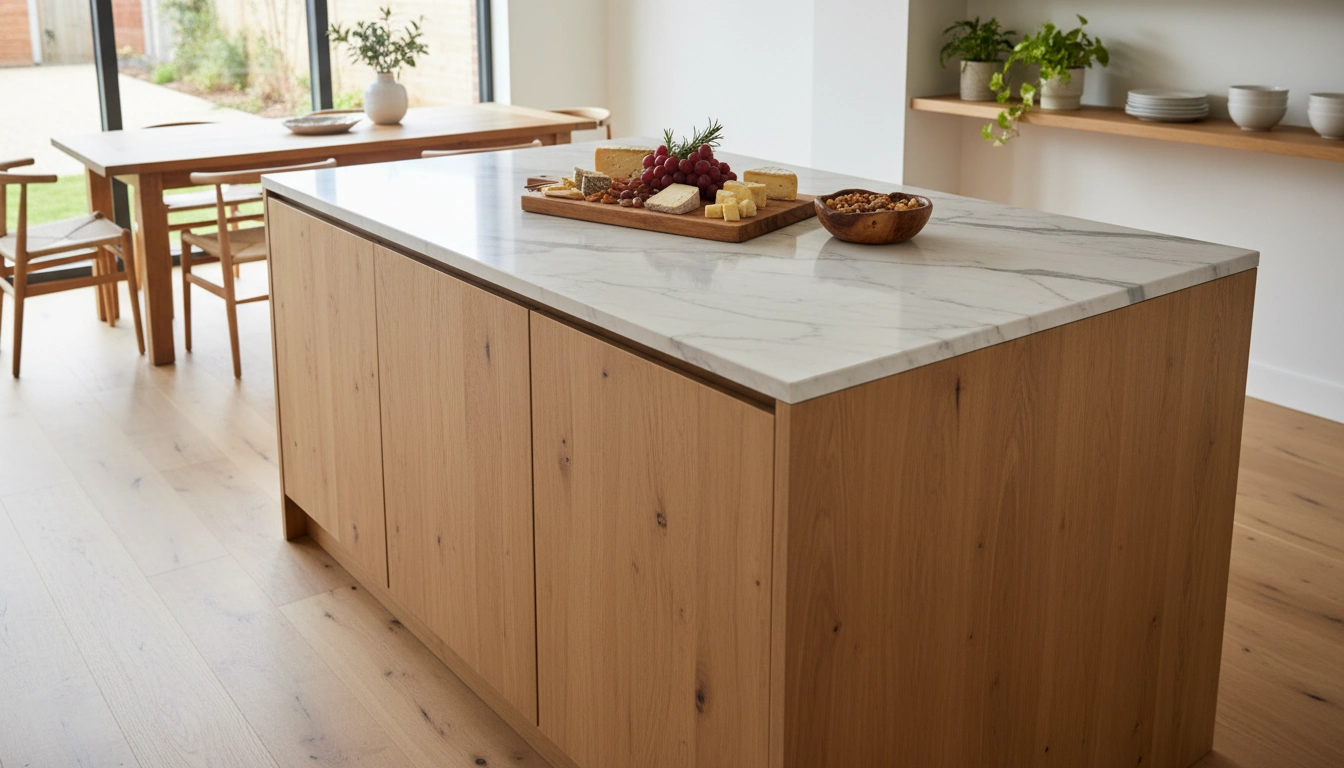
Does white marble go with wood?
Yes—white marble and wood are a classic pairing because they balance each other visually and texturally. Marble reads crisp, cool, and polished, while wood adds warmth and natural variation. Together, they create contrast that feels intentional rather than busy, whether the look is modern, transitional, or traditional.
How to make white marble and wood look cohesive
The easiest way to keep the combination looking pulled-together is to repeat tones and finishes across the space. If the marble has warm veining (beige, gold, taupe), medium-to-warm woods like walnut, oak, or acacia often feel seamless. If the marble looks icy white with gray veining, lighter oak, ash, or even espresso-stained wood can work—just keep other finishes (like hardware or lighting) consistent.
Choose the right wood tone for the marble’s veining
Look at the marble’s undertones first, not just the white background. Warm-veined marble tends to flatter honey and caramel woods; cool-veined marble pairs nicely with neutral or deeper stains. When in doubt, pick a wood finish that appears elsewhere in the room (floors, shelves, frames) so the marble doesn’t feel like it’s “floating” on its own.
Use metal or black accents to bridge the materials
Adding a third element—like stainless steel, brushed nickel, or matte black—can tie the marble and wood together and make the contrast feel designed. A table base, legs, or nearby décor in a matching metal helps the stone and wood share the spotlight without competing.
Where the combo works best
This pairing shines on coffee tables, dining tables, and console tops because the stone becomes a clean focal point while the wood softens the overall feel. If you like the marble look but want something more practical for daily use, a marble-look surface can deliver the same style with easier upkeep. For inspiration, see this guide to a marble-look MDF coffee table with a stainless steel frame.
FAQ
What wood color goes best with white marble?
Pick a wood tone that matches the marble’s undertone: warm veining pairs well with walnut, acacia, or warm oak, while cool gray veining works with light oak, ash, or darker espresso stains for contrast.












Leave a comment