Check Your Pet’s Weight at Home With Body Condition Score
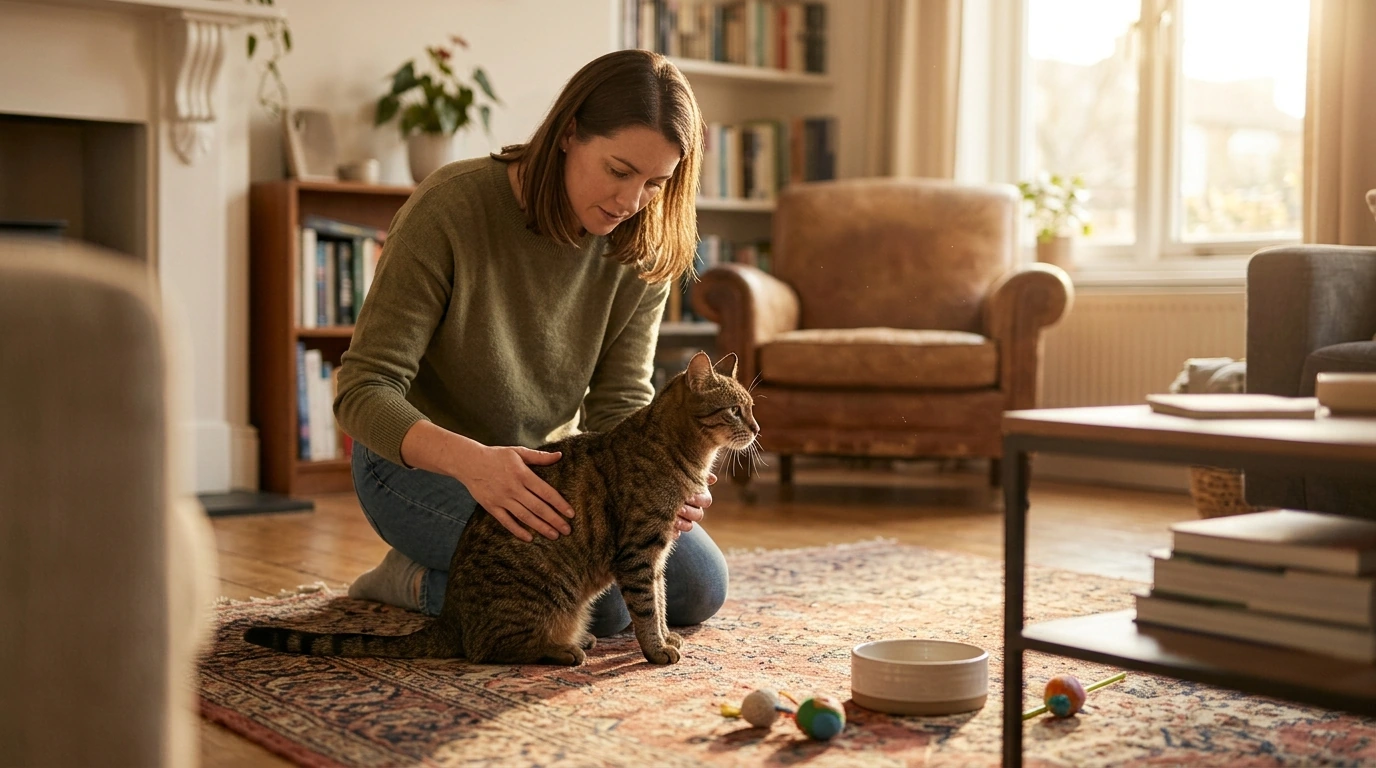
How do I tell if my dog or cat is overweight using a body condition score at home?
A Body Condition Score (BCS) is a quick, hands-on way to estimate whether your dog or cat is too thin, ideal, or carrying extra fat. Most at-home charts use a 1–9 scale, where 4–5 is typically “ideal.” You don’t need special tools—just your hands and a calm moment.
Step 1: Feel the ribs (don’t just look)
Run your fingers lightly over your pet’s ribcage. In an ideal BCS, you should feel ribs with a thin layer of fat—similar to feeling the bones on the back of your hand. If you have to press firmly to find ribs, that usually suggests overweight. If ribs feel sharp and obvious with little cushioning, your pet may be underweight.
Step 2: Check the waist from above
Stand over your pet while they’re standing. Dogs and cats at a healthy weight show a visible waist behind the ribs. If the body looks oval or wide with no inward “tuck,” that points toward excess weight.
Step 3: Look for an abdominal tuck from the side
From the side, the belly should slope up from the ribcage toward the hind legs. A hanging belly or straight underline can indicate extra fat, especially when paired with hard-to-feel ribs.
Step 4: Watch for common “extra weight” clues
Fat pads over the ribs, a thicker tail base, a rounded back end, or reduced stamina can support what your hands are telling you. Long fur can hide body shape, so prioritize touch over appearance—especially for fluffy cats and double-coated dogs.
If your home BCS suggests your pet is above ideal, small, consistent changes in portions, treats, and daily habits can make a big difference. For practical, sustainable steps, see this guide to sustainable pet weight management for dogs and cats.
FAQ
How often should I reassess my pet’s body condition score?
Check BCS every 2–4 weeks during weight changes and monthly once weight is stable. Regular check-ins help catch slow gain before it becomes significant.











Leave a comment