Fast Ways to Remove Pet Smells From Your House
How to get rid of pet smells in your house fast?
If your home suddenly smells like “pet,” the fastest fix is a short, focused routine that removes odor sources and refreshes the air—without just masking smells. Start with the rooms where your pet spends the most time and work top to bottom.
1) Air out and reset the space (5–10 minutes)
Open windows on opposite sides of the home to create cross-ventilation. Turn on bathroom/kitchen exhaust fans if available. Swap out any heavily scented candles or sprays—fresh air works faster than layering fragrance.
2) Locate the real odor source (2 minutes)
Quickly check the usual hotspots: litter box area, accident zones, rugs, upholstery, and pet blankets. If you can’t spot it, sniff close to the floor along baseboards and corners—odors settle low.
3) Absorb and neutralize on fabric surfaces (10–20 minutes)
For rugs and carpets, sprinkle baking soda, let it sit for at least 10 minutes, then vacuum slowly. For upholstery, use a fabric-safe enzyme spray (especially after accidents) and follow the label for dwell time—enzymes need time to work. Wash removable covers and throws on the warmest setting allowed, and add a cup of white vinegar to the rinse to help cut lingering odors.
4) Clean hard floors and “touch points” (10 minutes)
Mop sealed hard floors with a pet-safe cleaner, paying extra attention to entryways and areas near food and water bowls. Wipe down baseboards, crate surfaces, and the outside of the litter box—these collect oils and odor-causing residue.
5) Refresh the air without masking
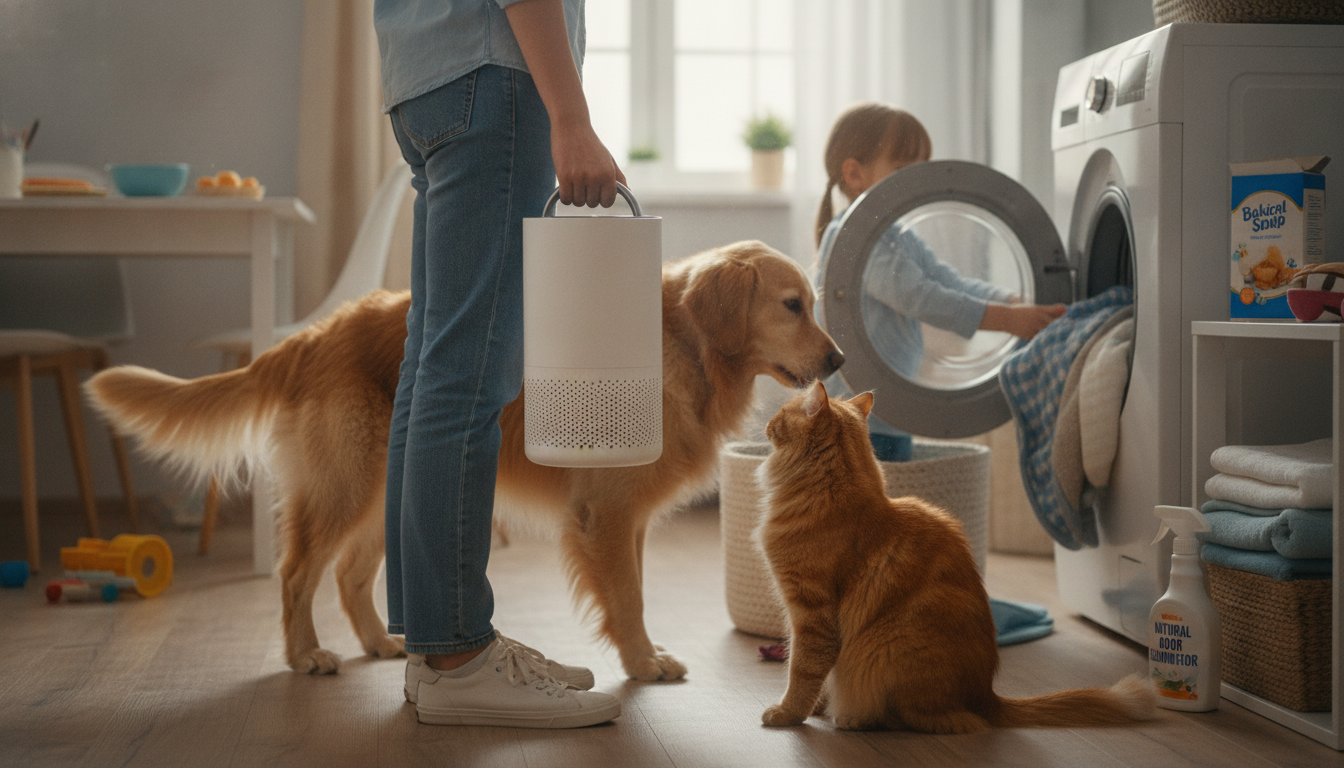
Replace HVAC filters if they’re overdue, and run an air purifier with a HEPA + activated carbon filter in the worst-smelling room. Activated carbon helps trap odor molecules, while HEPA captures dander that can carry smell.
For a deeper, guest-ready plan (including prevention and room-by-room strategies), see the full guide: https://imperatia.com/guide-how-to-reduce-pet-odors-fresh-guest-ready-home/.
FAQ
Why does my house still smell like pet after cleaning?
Odor often lingers when it’s trapped in porous materials (carpet pad, upholstery foam) or when the wrong cleaner was used for urine. Enzyme cleaners and thorough drying, plus replacing saturated padding if needed, usually solve persistent smells.









Leave a comment