Mix Metal Finishes Like a Pro: Room-by-Room Checklist
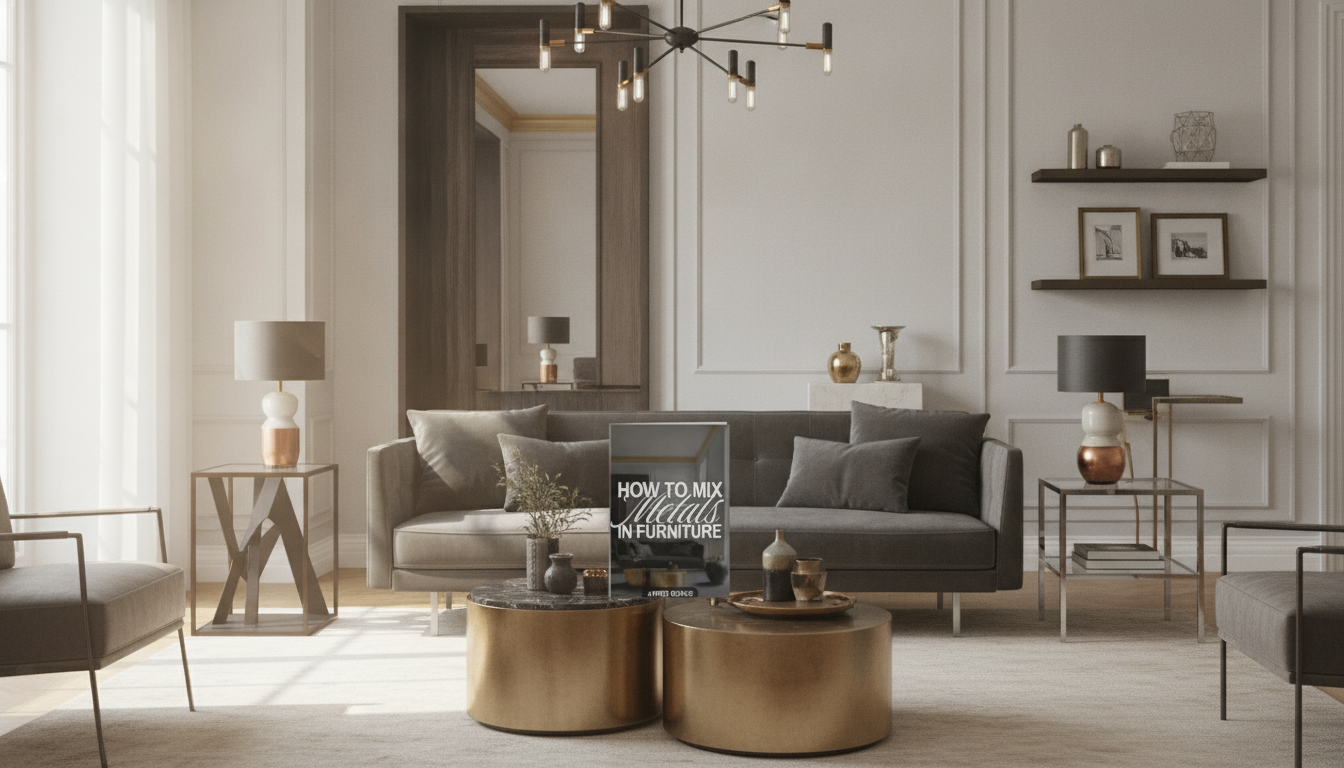
Mixing Metal Finishes in Furniture: A Practical Checklist for Balanced Rooms
Mixed metals can make a space feel layered and intentional—when there’s a clear plan for undertones, repetition, and proportions. The easiest way to keep the look polished is to treat metal finishes like a color palette: choose a lead, add a supporting player, then use a small accent for contrast. The checklist below walks through how to inventory what you already have, decide what should dominate, and repeat each finish in predictable places so the room reads cohesive rather than cluttered.
Start with a quick scan of the room
Before choosing anything new, take inventory. Metal “noise” usually comes from forgetting how many little items are competing for attention.
- List every visible metal: furniture legs, cabinet hardware, lighting, faucets, mirror frames, curtain rods, shelf brackets, appliances, and decor objects.
- Note what cannot realistically change soon (appliances, built-in plumbing fixtures, large light fixtures). Treat these as “fixed metals.”
- Identify the style baseline: modern (clean lines), traditional (ornate), industrial (raw), or transitional (a blend). The more ornate the room, the more important it is to limit the number of competing finishes.
- Decide where the eye should land first (a statement light, a mirror, a coffee table). The focal point often determines the dominant metal.
Room Metal Inventory (Fill-in Checklist)
| Item | Finish/Color | Warm or Cool | Fixed or Flexible | Notes (scale/shine) |
|---|---|---|---|---|
| Ceiling light / chandelier | __________ | Warm / Cool / Mixed | Fixed / Flexible | Matte / Satin / Polished; large / small |
| Furniture legs (sofa/chairs/table) | __________ | Warm / Cool / Mixed | Fixed / Flexible | Thin / chunky; modern / ornate |
| Cabinet pulls / knobs | __________ | Warm / Cool / Mixed | Fixed / Flexible | Consistency across kitchen/bath? |
| Faucet / plumbing trim | __________ | Warm / Cool / Mixed | Fixed / Flexible | Match drains/shower trim? |
| Decor accents (vases, frames) | __________ | Warm / Cool / Mixed | Fixed / Flexible | Good place for accent metal |
Choose a dominant, supporting, and accent metal
Rooms look intentional when one finish clearly leads. A simple 60/30/10 split helps you decide what to keep, what to add, and what to edit.
- Dominant metal (about 60% of visible metal): typically the finish on the largest items or most repeated hardware.
- Supporting metal (about 30%): used on secondary fixtures or medium-size furniture details to create contrast.
- Accent metal (about 10%): used sparingly for sparkle or punctuation—think tray, lamp finial, picture frame, or a small side table detail.
- Keep the metal count to two or three finishes per room. More than three can work in maximal spaces, but it requires strong repetition and consistent undertones.
Common Metal Pairings That Tend to Look Intentional
| Dominant | Supporting | Accent | Best for |
|---|---|---|---|
| Brushed nickel | Matte black | Antique brass | Transitional kitchens, mixed fixture eras |
| Warm brass | Aged bronze | Black | Traditional or warmly layered living rooms |
| Matte black | Brushed brass | Chrome (tiny doses) | Modern rooms needing warmth and shine |
| Chrome | Black | Brass | Contemporary spaces that want a little glow |
Match undertones before matching finishes
Undertone is the “temperature” a metal reads in your room’s lighting. Getting undertones right matters more than forcing every piece to match exactly.
- Warm metals: brass, gold, copper, many bronzes. These pair well with warm woods, creamy whites, and earthy palettes.
- Cool metals: chrome, many nickels, stainless steel. These complement crisp whites, blue/gray palettes, and cooler stones.
- Mixed/neutral metals: some brushed nickels and certain antiqued finishes can bridge warm and cool—use them to connect fixed metals that don’t naturally match.
- Use the room’s main “neutral” (wall color, stone, large upholstery) as the referee. If the neutral reads warm, lean toward warm metals; if it reads cool, keep the mix mostly cool with a smaller warm accent.
Undertone cues to check before committing
| Material nearby | If it looks warm… | If it looks cool… | Metal direction |
|---|---|---|---|
| White paint | Creamy/ivory | Bright/blue-white | Warm metals vs. cool metals |
| Stone/countertops | Beige/gold veining | Gray/blue veining | Brass/bronze vs. chrome/nickel |
| Wood tone | Honey, walnut, red oak | Ash, weathered/gray stains | Warm metals vs. cooler metals |
When you’re unsure whether something reads warm or cool, it helps to understand how color is described in more objective terms; the W3C overview of color systems provides useful context for thinking about undertones and perception.
Control contrast with texture and sheen
Repeat metals in predictable places
Use furniture as the bridge, not the battleground
How to choose (when you’re updating slowly)
- Keep the fixed metal and redesign around it: if plumbing and appliances are staying, select a dominant metal that harmonizes with them (often brushed nickel or matte black as a connector).
- Edit first, then add: remove extra shiny accessories so the main metals can be seen clearly.
- Standardize one category: making all cabinet hardware the same finish can instantly calm a room even if lighting differs. (For broader consistency considerations, see the NKBA kitchen and bathroom planning resources.)
- Use an accent metal intentionally: pick one “sparkle” finish and limit it to small, repeatable items (tray, frame, vase) rather than major fixtures.
- Test with low-commitment swaps: change a mirror frame, cabinet pulls, or a table lamp before replacing large fixtures.
Final checklist before calling it done
FAQ
How many metal finishes should be used in one room?
Two or three finishes is the sweet spot for most rooms. Use a dominant/supporting/accent plan so the mix feels structured, and only add a fourth finish if the room is large and each finish is repeated consistently.
Can chrome and brass be mixed without looking random?
Yes—choose brushed or satin versions to align the sheen, then add a bridging neutral like matte black or brushed nickel. Make it feel planned by repeating each finish at least three times around the room.
What is the easiest metal finish to pair with almost anything?
Matte black or brushed nickel is usually the easiest connector because it plays well with both warm and cool palettes. The result still depends on undertones and keeping the overall sheen consistent.











Leave a comment