AI Prompts for Magnetic Social Captions (Creator Guide)

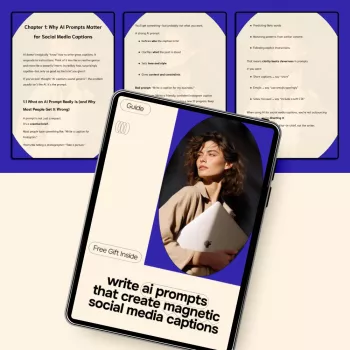
Magnetic captions don’t happen by luck—they come from clear intent, strong structure, and a consistent brand voice. With the right inputs, an AI tool can help generate on-brand options faster, with stronger hooks, clearer value, and cleaner calls to action—so fewer drafts die in the rewrite cycle. For more guidance, see 50 AI Prompts for Social Media: Posts, Captions, Reels, and Strategy ….
What Makes a Caption “Magnetic”
A caption earns attention when it’s built around one job, one reader, and one next step. The best ones feel effortless to read, but they’re rarely accidental. For further reading, see 40 Actionable Social Media Prompts for Marketers [+Examples].
- A clear purpose: educate, entertain, inspire, convert, or start a conversation.
- A strong opening line: a curiosity gap, contrast, benefit, or emotion that earns the pause.
- Specificity: concrete details beat vague hype—numbers, steps, examples, outcomes.
- Readable rhythm: short lines, natural language, intentional emphasis.
- A single next step: comment, save, share, click, DM, or try one simple action.
The Input Blueprint That Produces Better Captions
If AI outputs feel bland, the issue is usually the inputs. Strong instructions act like a creative brief: they define who it’s for, what it’s doing, and how it should sound.
- Define the audience segment: role, skill level, pain point, desired outcome.
- State the offer or message in one sentence: what it is, for whom, and why it matters.
- Provide context: platform, format (reel, carousel, photo), topic, and angle.
- Set voice rules: tone, pacing, banned phrases, emoji policy, punctuation style.
- Add proof assets: results, testimonials, data points, personal story beats, product features.
- Require a structure: hook + value + payoff + call to action + optional hashtags.
- Add constraints: character limit, reading level, and number of variants.
For platform guardrails and policy considerations, it helps to reference official guidance like the Meta Business Help Center and the TikTok Business Help Center when you’re unsure about claims or ad-related language.
A Repeatable Workflow for Fast, On-Brand Drafts
Speed comes from consistency. A repeatable workflow prevents “generate and hope” and replaces it with small, controlled iterations that keep your voice intact.
- Start with two lines: one-line goal + one-line audience definition before generating anything.
- Generate 5–10 variations: request distinct hook styles (question, bold claim, micro-story, list, myth-bust).
- Select the best spine: choose the clearest structure, then request refinements (shorter, punchier, more specific, more playful, more premium).
- Add brand polish: swap generic words with signature vocabulary and add proof points (real numbers, real outcomes, real moments).
- Run a quick compliance check: avoid medical/legal guarantees, misleading claims, or unlicensed trademarks.
- Save winners as templates: turn your best-performing instruction sets into reusable formats.
Caption Formats That Consistently Perform
When you’re stuck, lean on a format that already matches how people process information. These frameworks work across niches, from creators to e-commerce to service brands.
- Problem → agitation → solution: highlight the pain, name the cost of staying stuck, deliver the fix.
- Myth → truth → takeaway: correct a common belief, then offer a clear action.
- Before/after story: show the shift, then explain the turning point (what changed).
- Micro-tutorial: 3–7 steps where each line earns the next.
- Contrarian take: challenge the default advice, then replace it with a better approach.
- Community prompt: ask for opinions, experiences, or votes to drive comments.
Platform-Specific Guidance and Examples (At a Glance)
Caption strategy changes by platform because behavior changes. Match length to consumption style, and match the call to action to what people naturally do there (save, reply, click, or comment).
Quick Caption Playbook by Platform
| Platform | Best for | Recommended structure | What to specify in your instructions |
|---|---|---|---|
| Instagram (Reels/Posts) | Saves, shares, quick value | Hook + 3–5 value lines + save/share CTA + light hashtags | Topic angle, desired emotion, line breaks, emoji rules, max hashtags |
| TikTok | Conversation and watch-through | Hook + micro-story or tips + question CTA | Spoken-style tone, punchy first line, question to drive comments |
| Authority and trust | Hook + context + 3 insights + takeaway + thoughtful CTA | Professional tone, credibility details, avoid slang, keep it skimmable | |
| YouTube Shorts | Retention and curiosity | Hook + one key insight + subscribe CTA | Ultra-short length, single idea, strong payoff line |
For platform posting norms and brand-safe best practices, the LinkedIn Marketing Solutions Blog is a useful reference for what performs in professional feeds.
How to Choose the Right Guide or Tool for Caption Generation
Not every tool or resource is built for on-brand publishing. A strong option makes it easy to repeat what works and hard to drift into generic, copycat language.
- Look for clear frameworks: audience + goal + context + voice + constraints that you can reuse weekly.
- Prefer multiple real examples: across creator, e-commerce, and service brands (not just one niche).
- Check for editing guidance: practical steps for refining drafts into your voice rather than posting raw output.
- Ensure platform coverage: Instagram, TikTok, LinkedIn, YouTube, plus short-form variations.
- Choose materials that address boundaries: claims, sensitivity, and originality safeguards.
Common Issues and Fast Fixes
Measure What Works and Improve the Next Batch
FAQ
How many caption variations should be generated before choosing one?
Generate 5–10 options to explore different hook styles, then pick 1–2 winners and refine them with tighter specifics, clearer structure, and one strong call to action.
How can captions stay consistent with brand voice when using AI tools?
Use a written voice guide and include approved phrases, banned phrases, and a few sample captions. Require outputs to follow explicit tone and formatting constraints so the draft matches your house style.
Should hashtags be included every time?
No—use them selectively based on platform and niche. Prioritize relevance and readability, and cap the number so the caption stays clean and easy to scan.








Leave a comment