Indoor Plant Leaves Turning Yellow? Causes & Fixes
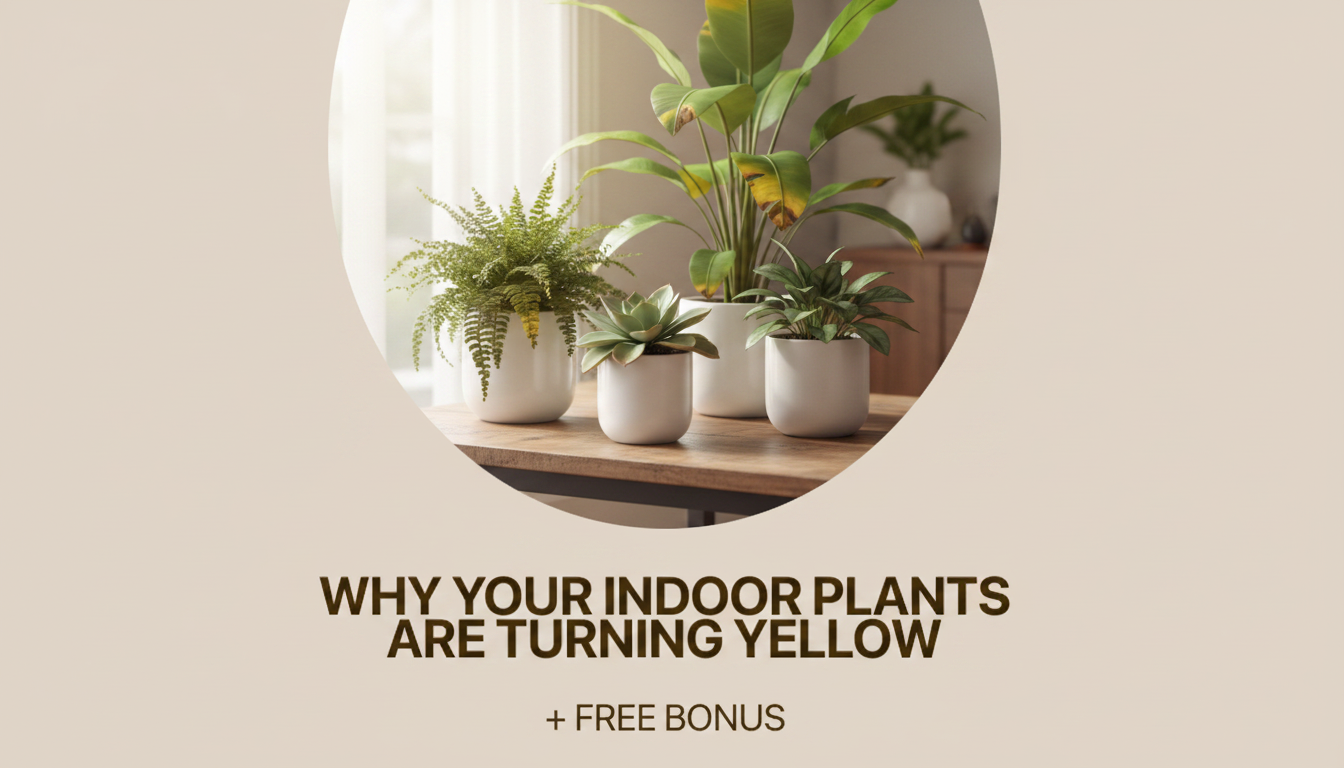
Why Indoor Plant Leaves Turn Yellow—and How to Bring Them Back to Healthy Green
Yellowing leaves are a stress signal, not a life sentence. The fix depends on the cause—watering patterns, light, nutrients, temperature swings, pests, or natural aging. Use the quick checks below to identify the most likely trigger and apply targeted care steps that support healthy new growth.
Start Here: Fast Checks That Narrow Down the Cause
- Which leaves are yellowing? Oldest leaves first can be normal aging or a nutrient shortfall; newest leaves yellowing points more often to light, watering, or micronutrients.
- What’s the pattern? Whole-leaf yellowing, yellow edges, yellow between veins, or yellow plus brown tips each suggests a different problem.
- How does the mix feel 2–3 inches down? Soggy, evenly moist, or bone-dry? A sour smell is a red flag for root trouble.
- Any pests? Check undersides, leaf joints, and stems for webbing, sticky residue, bumps, cottony clusters, or tiny moving specks.
- Confirm basics. Drainage holes matter. So does not letting the pot sit in water, and keeping pot size reasonable for the root ball.
Quick Symptom-to-Cause Guide
| What you see | Most common cause | First fix to try |
|---|---|---|
| Lower leaves turning yellow, soil stays wet | Overwatering / low oxygen at roots | Pause watering, improve drainage, increase light/airflow |
| Leaves yellow and dropping, soil very dry | Underwatering / inconsistent watering | Deep soak until runoff, then water on a schedule by soil dryness |
| Yellowing with soft stems or sour odor | Root rot | Unpot, trim rotten roots, repot into airy mix, adjust watering |
| Yellow between green veins (chlorosis) | Nutrient imbalance or pH issues | Use balanced fertilizer; consider iron/magnesium support if indicated |
| Pale yellow leaves near light source | Too much direct sun or heat stress | Move back from window, use sheer curtain, stabilize temperature |
Watering Problems: Overwatering, Underwatering, and “Right Amount, Wrong Timing”
Most indoor yellowing starts at the roots. Overwatering isn’t just “too much water”—it’s too little oxygen. When the mix stays wet, air pockets collapse, roots struggle to breathe, and leaves often yellow as the plant downshifts.
- Overwatering signs: persistent damp soil, yellow lower leaves, slow growth, and sometimes a musty smell.
- Underwatering signs: dull, papery yellow leaves and quick leaf drop after repeated dry-outs; one heroic soaking helps less than a consistent rhythm.
- Match watering to plant type: aroids often like evenly moist-to-slightly dry; succulents want full dry-down; many ferns dislike drying.
- Use a dryness threshold: for many houseplants, water when the top 1–2 inches are dry, then soak thoroughly until runoff.
- Prevent standing water: empty saucers after 10–15 minutes; be cautious with decorative cachepots without drainage.
For best-practice watering fundamentals, see the University of Minnesota Extension guidance on watering houseplants.
Light and Placement: Too Little, Too Much, and Sudden Moves
Light controls how quickly a plant uses water. In low light, growth slows, the mix stays wet longer, and yellowing can show up even if your watering amount never changed.
- Too little light: pale growth, longer time between dry-downs, and gradual yellowing—especially after seasonal daylight drops.
- Too much direct sun: washed-out yellow areas, crisping, or bleached patches—often after moving a plant closer to a bright window abruptly.
- Rotate for balance: turning the pot weekly or biweekly prevents lopsided growth and patchy stress.
- Distance matters: “bright indirect” often means within a few feet of an east/south/west window with filtering as needed.
- Acclimate changes: increase light over 1–2 weeks rather than overnight.
General indoor care principles (including light basics) are also covered by the Royal Horticultural Society’s houseplant resources.
Nutrients, Water Quality, and Potting Mix: When Yellowing Is a Feeding Problem
If watering and light seem reasonable, yellowing can be a nutrition or mix-structure issue. The key is distinguishing a true deficiency from a root problem that prevents uptake.
- Nitrogen deficiency: older leaves fade yellow slowly; growth may be smaller or sluggish.
- Micronutrient issues: interveinal chlorosis (yellow between green veins); which leaves show it can vary by nutrient and plant.
- Hard water and salt buildup: white crust on soil or pot rims, yellowing plus tip burn, and general stress.
- Fertilizer timing: feed during active growth and only when the root ball is already moist; overfertilizing can mimic drought stress.
- Old, compacted mix: holds too much water and too little air; if soil stays wet for many days, structure may be the real culprit.
When flushing salts, run clean water through the pot for a minute or two and let it drain fully, then resume normal watering once the correct dry point returns.
Temperature, Humidity, and Drafts: Hidden Stressors Indoors
Indoor conditions can sabotage “perfect” care. Drafts and heat blasts change transpiration fast, and leaves often respond with yellowing and drop.
Pests and Disease: When Yellowing Comes With Spots, Sticky Leaves, or Webbing
Natural Leaf Aging vs. a Problem: What’s Normal
How to Choose the Right Fix for Your Plant (Without Guessing)
Simple Recovery Plan for the Next 30 Days
If you need more troubleshooting references for common indoor issues, NC State Extension maintains a helpful library of houseplant resources and common problems.
FAQ
Can yellow leaves turn green again?
Usually no; damaged tissue typically won’t re-green. Focus on correcting the cause and judge recovery by healthy new growth.
Should yellow leaves be removed?
Remove fully yellow leaves that detach easily or look mushy; keep partially yellow leaves until the issue is corrected so the plant can reuse remaining resources.
How often should indoor plants be watered to prevent yellowing?
There isn’t one schedule; water when the soil reaches the right dryness level for that plant and environment. Light, pot size, and season change the timing.








Leave a comment