Move Smart for More Energy: Sustainable Workouts That Stick
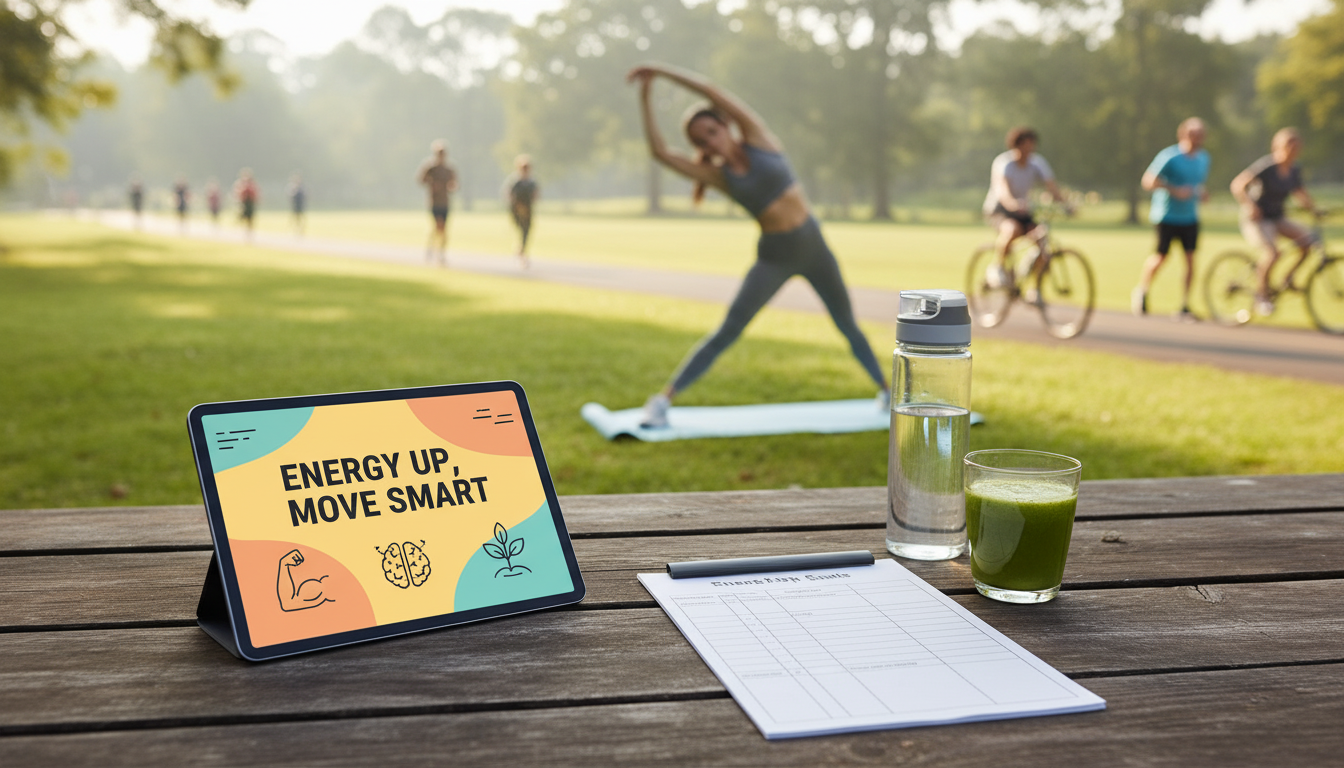
Energy Up, Move Smart: A Simple System for More Daily Energy and Sustainable Workouts
More energy rarely comes from pushing harder—it comes from moving smarter. A “move smart” approach focuses on small, repeatable habits: better warm-ups, efficient strength and mobility patterns, and recovery that fits real schedules. The payoff is steady energy, fewer nagging aches, and workouts that stay consistent for weeks and months—without living in the gym.
What “Move Smart” Means When Energy Is the Goal
Training for energy is less about doing the most and more about doing what you can repeat. “Move smart” means prioritizing movement quality—stable joints, controlled ranges of motion, and breathing that matches effort—so each session builds you up instead of draining you.
- Prioritize movement quality: steady tempo, clean positions, and pain-free ranges.
- Train for repeatability: pick sessions you can recover from, not just survive.
- Use minimum effective dose days: keep momentum when time or energy is low.
- Build a weekly rhythm: hard days, moderate days, and true recovery days.
- Track 2–3 signals: sleep, soreness, and mood/drive to adjust without overthinking.
For baseline activity targets, guidelines from the CDC and the World Health Organization can help you calibrate “enough” without defaulting to “more.”
Common Energy Drains That Come from Training (Not Laziness)
If workouts regularly leave you foggy, sore for days, or dreading the next session, it’s often a programming issue—not a motivation issue. The most common drains are predictable, and they’re fixable.
- Going intense too often: frequent all-out sessions flatten energy and spike soreness.
- Skipping warm-ups: cold starts raise perceived effort and reduce performance.
- Too much volume with poor recovery: long sessions pile fatigue faster than results.
- Inconsistent fueling and hydration: under-eating around training can feel like “no motivation.”
- All-or-nothing mindset: missing one day becomes missing a week.
Training Tweaks That Often Improve Energy
| Energy issue | Likely cause | Smart adjustment |
|---|---|---|
| Feeling wiped out after workouts | Intensity too high too often | Cap hard days at 1–2/week; add easy zone-2 or mobility days |
| Soreness lasting 3–5 days | Too much volume or too many new exercises | Reduce sets by 20–30%; repeat the same main lifts for 2–4 weeks |
| Low drive to start training | Warm-up is too long or unclear | Use a 5-minute “start line” routine (breath + joints + 1 easy set) |
| Energy crashes mid-day | Hydration/fueling gaps | Protein + carbs post-workout; water + electrolytes if sweating heavily |
| Stalled progress | No progression plan | Add small weekly progressions: reps, load, or range of motion—one at a time |
The Smart Movement Foundation: Mobility, Stability, Strength
“Move smart” training is built on a simple stack. First, earn usable range of motion. Next, control that range. Then, load it progressively.
- Mobility: access to usable range (hips, ankles, thoracic spine) without pinching or compensation.
- Stability: control at end ranges (bracing, scapular control, hip stability).
- Strength: build capacity with basic patterns—squat/hinge/push/pull/carry/rotate.
- Joint-friendly modifications: neutral grips, controlled tempo, partial-to-full range progressions.
- Time-saving pairs: hinge + push, squat + pull, carry + core.
If you like clear standards for safe, repeatable training structure, guidance from the American College of Sports Medicine (ACSM) is a useful reference point—especially around balancing strength, conditioning, and recovery.
A Sustainable Weekly Template (20–45 Minutes per Session)
This template keeps the nervous system fresh while still building strength and capacity. The key is leaving a little in the tank most days—finishing training feeling capable, not cooked.
- Day 1 (Strength): full-body basics, 4–6 moves, moderate effort (leave 1–2 reps in reserve).
- Day 2 (Restore): mobility flow + easy walk/cycle; finish feeling better than you started.
- Day 3 (Strength): repeat patterns with a small progression (one extra rep or small load increase).
- Day 4 (Optional): short conditioning or technique day; keep it conversational, not punishing.
- Day 5 (Recovery): light movement snacks across the day; longer stretch or breathing at night.
- Weekend: one “fun movement” session (hike, sport, dance) for consistency without burnout.
If you want a plug-and-play way to decide what to do on any given day, the Energy Up, Move Smart digital fitness guide (eBook + checklist download) is designed around the same session types—strength, restore, and minimum-dose options—so you can stay consistent through busy weeks.
Movement Snacks: Micro-Workouts That Add Up
When energy dips (especially on desk-heavy days), short “movement snacks” can raise circulation, reduce stiffness, and improve mood without triggering recovery debt. Think of them as a light switch, not a test.
Recovery That Actually Restores Energy
One overlooked energy-saver: reduce friction around training. Keeping your equipment clean, dry, and ready makes it easier to follow through. The Train Smarter and Make Your Gear Last sports gear care guide (digital download) offers simple routines to extend the life of shoes, gloves, bands, and everyday training gear—so small problems don’t become skipped workouts.
Using the Digital Guide + Checklist to Stay Consistent
Who This Approach Fits Best
FAQ
How quickly can energy improve after switching to smarter workouts?
Many people notice better post-workout fatigue and fewer “crash days” within 1–2 weeks when intensity and volume are kept recoverable. More noticeable stamina and steadier day-to-day energy typically show up over 3–6 weeks with consistent sleep, fueling, and repeatable training.
Is this guide suitable for beginners with no equipment?
Yes. The core is movement patterns (squat, hinge, push, pull, carry, rotate) that can be trained with bodyweight and household alternatives, then scaled by range of motion, tempo, and reps as strength improves.
How many days per week are enough to see results without burning out?
Two to three strength sessions per week is enough for progress for most people, especially when paired with optional restore/mobility days. Recovery and repeatability drive results—doing slightly less, more consistently, tends to beat sporadic max-effort weeks.











Leave a comment