Beginner Home Workout: 3-Day Plan + 4-Week Progression
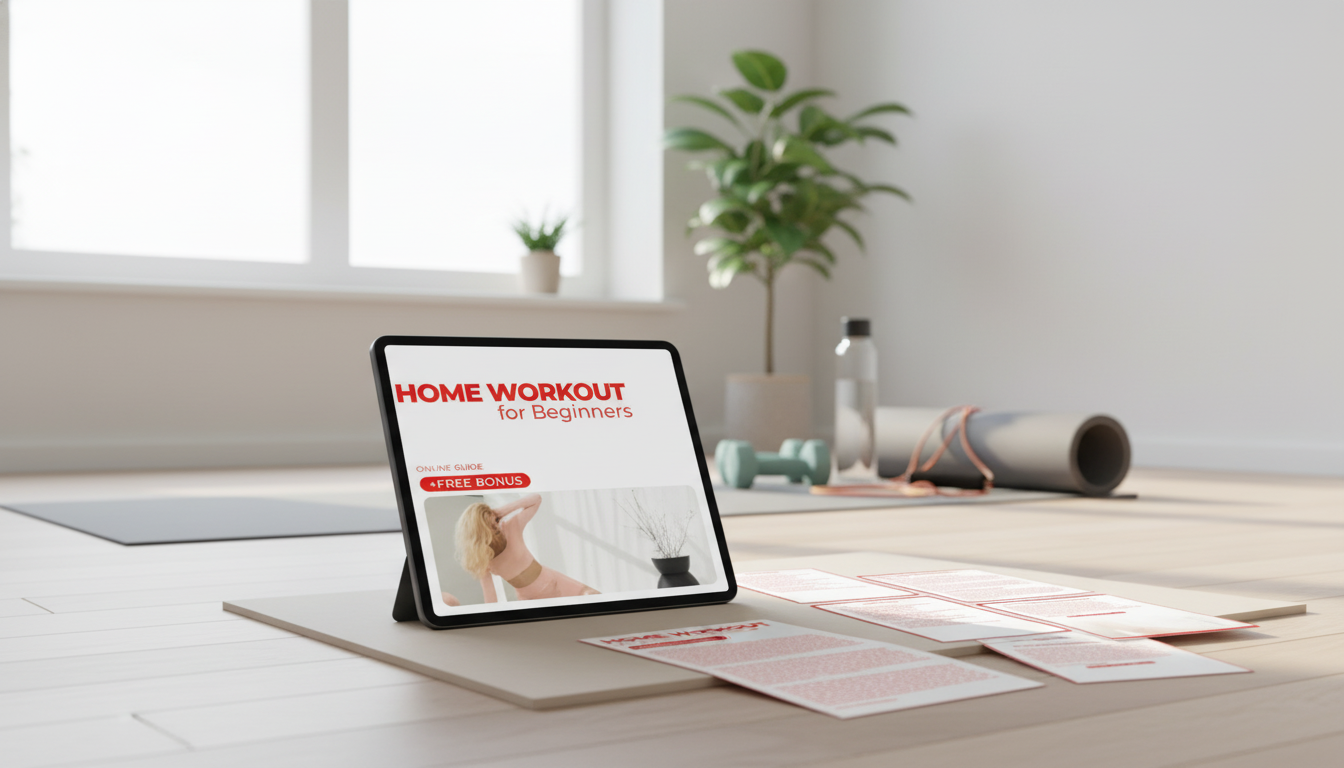
Home Workout for Beginners: A Simple At-Home Routine to Build Strength, Stamina, and Confidence
Starting at home can feel overwhelming, but progress comes from a few repeatable steps: move well, train consistently, and recover on purpose. This guide lays out a beginner-friendly routine that needs little space, scales to any fitness level, and helps build a sustainable habit—without guessing what to do each day.
For general activity benchmarks and safety basics, the Physical Activity Guidelines for Americans and the CDC Physical Activity Basics are solid references.
What a beginner home workout should do (and what to avoid)
A good beginner routine is simple enough to repeat, but complete enough to build real, whole-body fitness.
- Prioritize full-body movement patterns: squat, hinge, push, pull, carry/core.
- Keep sessions repeatable: 20–35 minutes is long enough to improve and short enough to stick with.
- Start at low to moderate intensity: finish feeling like you could do a little more.
- Avoid common traps: daily max-effort workouts, random high-volume challenges, and pain-driven training.
- Use simple progression: add reps, add sets, slow tempo, or shorten rest—change one variable at a time.
Set up your space and gear in 5 minutes
- Clear a 6×6 ft area; use a mat or folded towel for comfort.
- Wear stable shoes, or go barefoot for balance work if the surface is safe and non-slip.
- Optional equipment: a resistance band, a backpack for load, and a chair/sofa for incline moves.
- Keep water nearby and set a timer for intervals and rest periods.
- Choose a consistent time of day to reduce decision fatigue.
If you want extra structure (with a simple calendar and clear modifications), check out Home Workout for Beginners: Your Ultimate Fitness Routine for Beginners at Home Guide.
Warm-up: 6 minutes to move better
Warm-ups should make movement feel smoother—not leave you tired before the workout begins.
- Breathing reset (30–60 seconds): slow nasal breaths to reduce tension.
- Joint prep (2 minutes): neck turns, shoulder circles, hip circles, ankle rolls.
- Activation (2 minutes): glute bridges (10 reps), dead bug (6/side), scapular wall slides (8 reps).
- Pattern rehearsal (2 minutes): bodyweight squat (8 reps), hip hinge (8 reps), incline push-up (6 reps).
Beginner home workout plan (3 days per week)
Schedule: Day A, rest, Day B, rest, Day A, rest, rest. Next week, alternate so Day B gets two sessions.
- Work at an effort around 6–7/10; stop 1–3 reps before form breaks.
- Rest 45–90 seconds between sets (longer is fine if it helps you move well).
- If a movement causes sharp pain, swap it for the easier option listed.
Weekly Routine: Day A / Day B
| Day | Exercise | Sets x Reps | Beginner Option | Progression Option |
|---|---|---|---|---|
| Day A | Squat to chair | 2–3 x 8–12 | Higher chair, slower tempo | Remove chair, add 1 set or pause at bottom |
| Day A | Incline push-up (hands on chair/sofa) | 2–3 x 6–12 | Higher incline | Lower incline or add reps |
| Day A | Hip hinge (good morning) or glute bridge | 2–3 x 10–15 | Shorter range of motion | Single-leg bridge or backpack hinge |
| Day A | Plank | 2 x 15–30 sec | Knees down plank | Longer holds or shoulder taps |
| Day B | Reverse lunge (or split squat) | 2–3 x 6–10/side | Hold chair for balance | Add reps or slower lowering |
| Day B | Row (towel row around a sturdy post) or band row | 2–3 x 8–12 | Isometric squeeze 10–20 sec | Add a set or slow the pull |
| Day B | Hip hinge (backpack deadlift) or glute bridge | 2–3 x 8–12 | Lighter backpack | Heavier backpack or 1.5 reps |
| Day B | Side plank | 2 x 10–25 sec/side | Knees bent | Longer holds or top-leg lift |
Optional finisher: 8 minutes for stamina (low impact)
- Choose one: marching in place, step-ups, shadow boxing, or brisk stair walking.
- Format: 20 seconds easy + 20 seconds moderate + 20 seconds easy, repeat 8 rounds.
- Keep breathing controlled; posture tall; shoulders relaxed.
- Skip the finisher on stressful weeks—consistency beats intensity.
Progress plan: 4 weeks without overthinking
- Week 1: learn form; choose easier variations; hit the low end of rep ranges.
- Week 2: add 1–2 reps per set for 1–2 exercises.
- Week 3: add 1 set to one lower-body move and one upper-body move.
- Week 4: keep sets the same; slow the lowering phase to 3 seconds for control.
- Deload when needed: cut sets in half for one week, then resume.
Form cues that prevent common beginner mistakes
Recovery basics that make workouts work
Small recovery habits also protect what you already own. If you train at home with bands, mats, or accessories, Train Smarter and Make Your Gear Last – Sports Gear Care Guide can help you keep everything clean, functional, and ready to use.
Follow-along option for structure and motivation
FAQ
How long should a beginner home workout be?
About 20–35 minutes including a warm-up is a reliable target. Keep 1–3 reps in reserve so you can recover well and repeat the workout consistently, then add time later if you’re feeling strong and sleep is solid.
How many days a week should beginners work out at home?
Three full-body sessions per week with rest days between them works well for most beginners. On off days, light walking or a short mobility session can help without piling on fatigue.
Can beginners build muscle with bodyweight workouts at home?
Yes—if you apply progressive overload by adding reps, sets, tempo control, or range of motion over time. As moves get easier, adding a backpack load or resistance bands and supporting recovery with protein and sleep makes progress more consistent.
















Leave a comment